
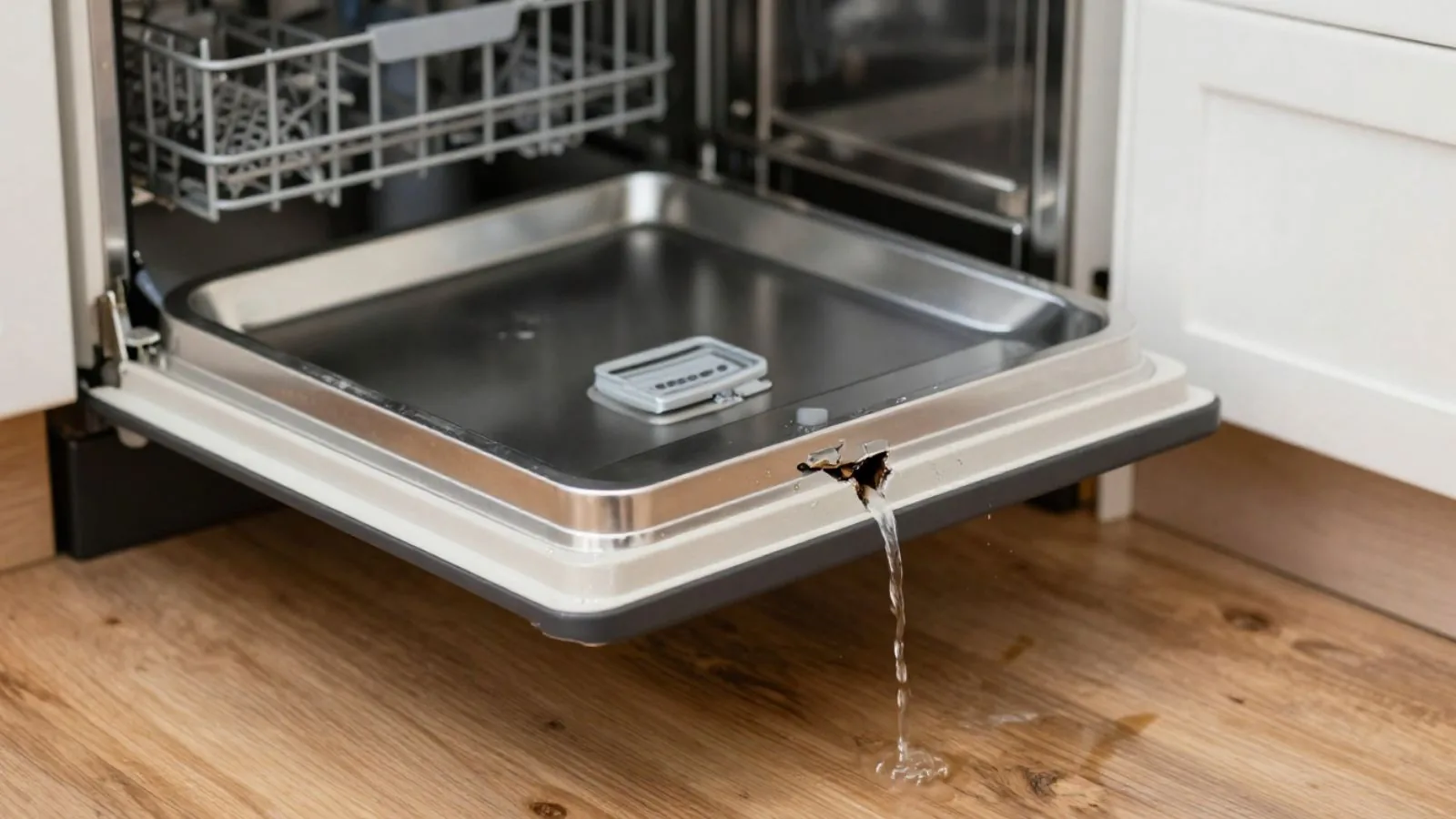
When an appliance leak is an emergency
Appliance leaks often start small and become floods. A washer hose can burst under pressure, a dishwasher can overflow during a cycle and a refrigerator's ice-maker line can leak behind the unit for days. A supply hose failure is the most urgent, because the water keeps coming until the valve is closed.
- Close the shutoff valve behind or below the appliance. If you cannot find it, close the main.
- Unplug the appliance only if the outlet and floor around it are dry.
- If standing water reaches the outlet or panel, stay out and call the electric utility or 911.
- Pull out rugs and mats and lift what you can from the floor.
- Photograph the appliance, hose and water spread.
We take calls 24/7, including late-night cycles and weekend laundry, and offer same-day response when available.
Which appliances leak, and where the water goes
Washing machine
Supply hoses fail at the connection or burst under pressure, and drain hoses slip out of the standpipe. Water often reaches the floor below.
Dishwasher
Door gaskets, inlet valves and drain connections leak into cabinets and under flooring.
Refrigerator
Ice-maker and water-dispenser lines leak slowly behind the unit and soak flooring and subfloor unseen.
Water softener or filter
Fittings and tanks leak onto basement or utility floors.
A very slow leak can be as harmful as a burst. Water behind a refrigerator or under a dishwasher can soak the subfloor for weeks before the floor warps, which is why we use moisture meters rather than trusting the surface.
What we do after an appliance failure
Appliance water is often Category 1, but a dishwasher or washing machine that discharged wastewater can be Category 2. The category decides how aggressively materials are cleaned or removed.
- Extract standing water and pull the appliance out if needed to reach the wet area.
- Check the floor, subfloor, cabinet base and drywall with moisture meters.
- Open or remove flooring and cabinet kickplates where water is trapped.
- Dry with air movers and dehumidifiers until readings return to normal.
- Document the cause and damage for your claim.
Appliance leaking right now?
Close the valve and call the 24/7 line. We will tell you what to move and what to leave alone.
Decisions about floors and cabinets
What happens to the floor depends on the material. Vinyl and tile are usually dried in place, though water can seep under planks and between tiles. Laminate swells at the edges and rarely recovers. Hardwood can cup as it absorbs moisture, which is covered on the hardwood floor page. Carpet and pad are addressed on the carpet page.
Cabinets near a dishwasher or sink are covered on the kitchen water damage page, including how particleboard bases and toe kicks respond to water.
Appliance leaks in South Orange homes and apartments
Downtown South Orange, near the 1916 train station and along South Orange Avenue, has apartment and condominium buildings alongside the single-family streets. A washer leak in a multi-unit building can reach the unit below, so the responsible party matters. If you rent, the rental guide explains notice to the landlord and how New Jersey's habitability rules apply.
In a house, laundry often sits in the basement, where the water goes to the lowest point. Check your hoses. Braided stainless steel hoses are a common upgrade over plain rubber ones, and an old hose is worth replacing before it fails. A leak detector on the floor near the machine gives an early alarm.
What the industry standard says
Appliance leaks usually involve clean supply water, which the ANSI/IICRC S500 standard classes as Category 1. That class changes if the water sits long enough or touches soiled materials, so the standard asks the crew to reassess as the job goes on and to set drying goals from readings in dry reference materials.
What to do before help arrives
- Unplug the appliance only if the floor around the outlet is dry and you can reach it safely.
- Close the supply valve behind or beside the appliance.
- Do not walk through standing water if cords or outlets are nearby.
- Move rugs and boxes off the wet floor.
- Take dated photos of the appliance, the floor and any wet cabinet.
These steps are about safety and keeping the damage from growing. They are not a substitute for the instructions of your utility, fire department or electrician.
What shapes the cost
Water category
Clean supply water and drain water are handled differently.
How long it leaked
Hidden slow leaks affect more material than a quick spill.
Floor type
Tile, vinyl, hardwood and carpet each respond differently.
Cabinets and drywall
Wet cabinet bases and wall bottoms add scope.
Drying equipment
The moisture map sets equipment and days.
Insurance note: coverage depends on your policy and on what caused the loss. The New Jersey Department of Banking and Insurance states that homeowners policies exclude water damage caused by flood, which needs separate flood coverage. Sudden appliance failures are often addressed, while long-term seepage may not be, so the timeline matters to your adjuster.
Want your real number? Call (973) 913-7965. We explain scope and price before work starts.
Frequently asked questions
Do you handle appliance leak emergencies at night or on weekends in South Orange?
Yes. The 24/7 line is open at all hours. Shut the appliance's valve and call. We offer same-day response when available.
Who pays if my washer floods the apartment below?
That depends on your lease, the cause and the insurance involved. Report it to your landlord in writing right away and document the damage. Our rental guide explains the notice steps.
Can I tell if there is water behind my dishwasher or fridge?
Sometimes by a musty smell, a soft floor or discoloration near the unit, but moisture meters are more reliable than looking. If you suspect a slow leak, call us.
Should I replace the appliance hose?
If it is rubber and several years old, replacing it with a braided hose is a common preventive step. A plumber can help if you are unsure.
Will insurance cover appliance leak damage?
Many policies cover sudden discharge from an appliance but not wear or long-term seepage. Your policy and adjuster decide.