
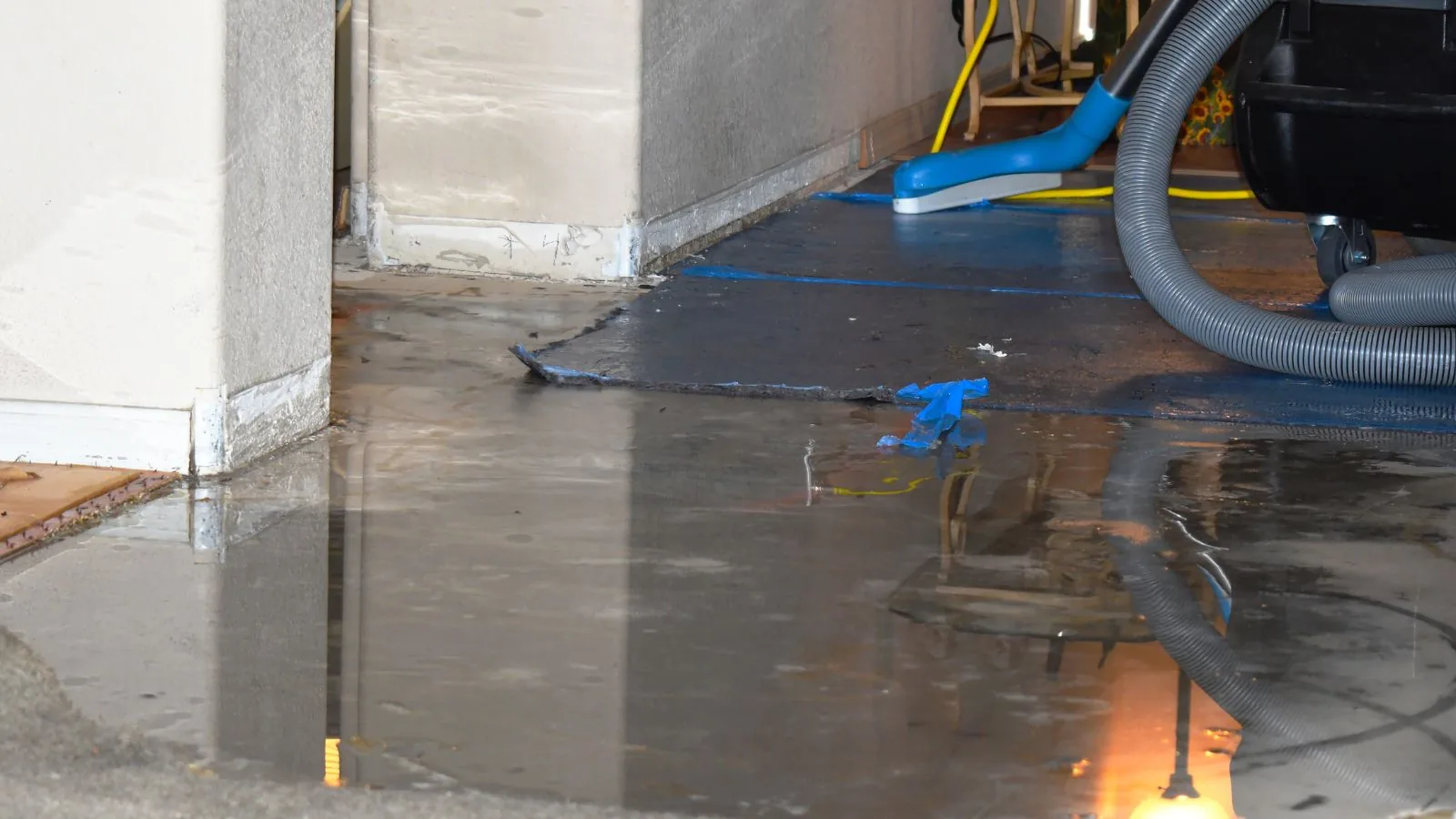
When standing water is an emergency
Water on a floor is an emergency when it is still coming in, when it is deeper than a quarter inch across a room or when it has reached carpet, a finished basement or a wall base. Pooled water soaks into whatever it touches, so the job gets bigger with each hour. Day or night, the fastest way to cut that growth is to stop the source and start removing the water.
If it is safe to do so, take these steps while you reach our line:
- Shut off the water at the main valve if a pipe or fixture is the source.
- Turn off power to the wet area only if you can reach the panel without stepping in water. Otherwise stay out and call the utility or 911 for any sparking, buzzing or gas smell.
- Lift electronics, rugs, boxes and soft furnishings onto tables, counters or stairs.
- Keep children and pets out of the water, especially if it came from a drain, toilet or outdoors.
- Take photos and short video of the water level and the affected rooms before anything moves.
What water extraction actually involves
Extraction is the removal of bulk water before drying starts. Which tool does the work depends on depth, floor type and access. A basement with several inches of water needs a submersible pump and hose run to a drain or the outdoors. A carpeted living room needs a weighted extraction wand that pulls water out of both the carpet and the pad beneath it. Hard floors are cleared with wet vacuums and squeegees.
Submersible pumps
Move deep water out of basements, garages and crawl spaces through a hose, working until the pump starts sucking air.
Extraction units
Portable or truck-mounted units pull water from carpet, pad and hard floors with strong suction and a wand.
Wet vacuums
Reach corners, stair treads and cabinet bases where larger machines cannot fit.
Moisture meters
Show what is still wet in the floor, the wall base and the framing once the visible water is gone.
A crew also checks for hidden water. Water travels under baseboards, behind cabinet kickplates and into the cavity of the wall, so a floor that looks dry can still hold moisture behind it.
Water category changes the plan
Not all standing water is equal. Restoration practice follows the ANSI/IICRC S500 standard, which groups water into three categories based on the source. The category tells everyone how to handle the water and what happens to porous materials such as carpet pad.
| Category | Typical source | How it is handled |
|---|---|---|
| Category 1 | Supply line, sink overflow, tank leak | Extract, then dry. Most materials can be saved if the response is fast. |
| Category 2 | Dishwasher or washing machine discharge, toilet overflow with urine only | Extract and dry with added cleaning. Porous items such as pad are often removed. |
| Category 3 | Sewage, river or surface flood water | Treated as contaminated. People stay out, and affected porous materials are removed. See sewage backup cleanup. |
Standing water in your home or building?
Call the 24/7 line and tell us the depth, the source and the rooms involved. We will tell you how we would approach it and what to do until a crew is on site.
Pump-out is step one, drying is step two
Many people assume the job is finished when the floor stops looking wet. It is not. Water left in subfloors, wall bottoms and insulation keeps feeding swelling, staining and odor. After extraction we map what is still wet with moisture meters and, where needed, thermal imaging, then set air movers and dehumidifiers to pull the rest out. That process is covered on the structural drying page.
If the water came from outdoors, from a failed sump or from rising groundwater, the situation overlaps with flood damage cleanup and basement water damage. A pipe failure is handled on the burst pipe page.
Standing water in South Orange: what the local setting changes
The East Branch of the Rahway River runs the full length of the village. It is usually a trickle, but it can rise sharply after heavy rain, and the Village describes South Orange as having low-lying areas prone to flooding. During Hurricane Ida remnants on September 1, 2021, residents across South Orange and Maplewood spent the night bailing basements and moving belongings upstairs.
The South Orange Office of Emergency Management lists South Orange Avenue westbound as the evacuation route and asks residents not to return home until officials say it is safe. If floodwater is entering from outside, follow those instructions first. Call our line once you are safe, and we can plan the extraction as soon as the property can be entered.
What shapes the cost of extraction
Water category
Clean supply water is simpler than gray or contaminated water, which adds cleaning and disposal steps.
Depth and area
More square footage and more depth means longer pump time and more equipment.
Materials affected
Carpet and pad, hardwood, finished drywall and insulation each need different handling.
Access
Basement stairs, crawl space openings and long hose runs affect crew time.
Drying afterward
Extraction is one phase. Drying days and equipment count are priced separately once the moisture map is done.
Insurance note: coverage depends on your policy and on what caused the loss. The New Jersey Department of Banking and Insurance states that homeowners policies exclude water damage caused by flood, which needs separate flood coverage. Photos taken before extraction help document the loss.
Want your real number? Call (973) 913-7965 and we will explain the scope and price before any work starts.
Frequently asked questions
Do you handle water extraction emergencies at night or on weekends in South Orange?
Yes. The line is staffed 24/7, including nights, weekends and holidays. We offer same-day response when available, and we will talk you through stopping the source and staying safe while a crew is arranged.
How long can water sit before it causes lasting damage?
Damage starts immediately and builds. Drywall wicks water upward, wood begins to swell and carpet pad holds moisture against the subfloor. Removing bulk water within the first day usually saves more material than waiting.
Can I use a shop vacuum myself?
For a small spill from a clean source, a wet vacuum helps. For deeper water, anything near outlets or any water from a drain, sewer or outdoors, leave it to a crew. Water near electricity is a shock risk, and a household vacuum does not remove water from carpet pad.
Do you also dry the building after the water is removed?
Yes. Extraction is followed by a moisture check and a drying plan using air movers and dehumidifiers. That work is described on our structural drying page.
Will you help with my insurance claim?
We document the loss with photos, moisture readings and notes that your insurer may ask for. The claim itself is between you and your insurance company, and your adjuster makes the coverage decision.