
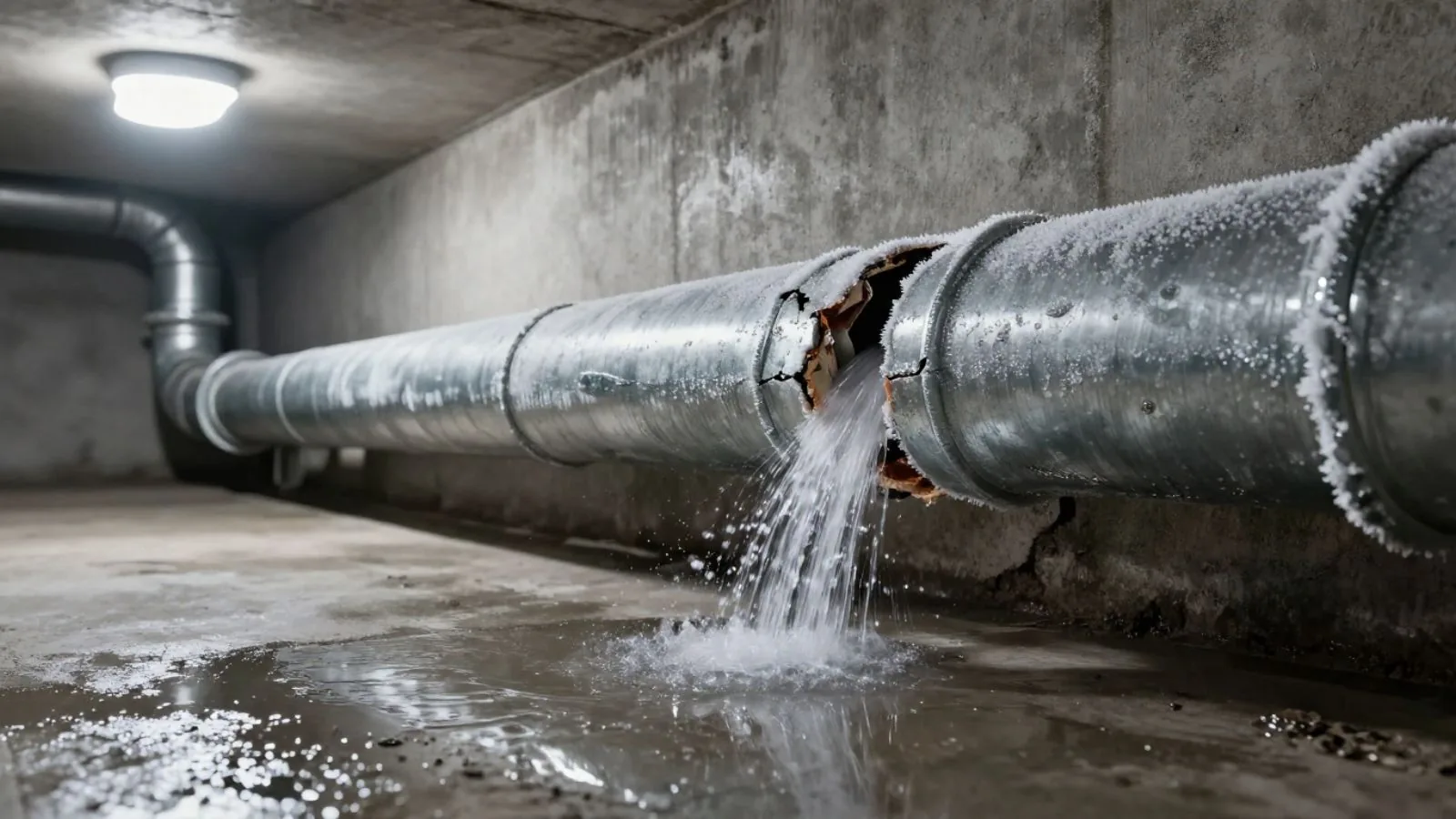
A frozen pipe can turn into a flood when it thaws
Water expands as it freezes. The ice itself rarely bursts the pipe at the frozen spot. Pressure builds between the ice plug and a closed faucet, and the pipe splits where the pressure is highest. The split can stay sealed while the ice holds, then release all at once as temperatures rise.
That is why many frozen-pipe losses are discovered on the first warm afternoon, or when someone turns the heat back up. If you see frost on a pipe, no water at a tap or a bulging line, treat it as a potential leak before it thaws.
What to do right now
- Close the main water valve before the pipe thaws, if you can reach it.
- Open the faucets near the frozen section so melting water has somewhere to go.
- Never use an open flame to thaw a pipe. Gentle, steady warmth such as a hair dryer or warm towels is safer.
- If water is already flowing, keep the main closed and move belongings out of the wet area.
- Stay away from electrical panels or outlets that water has reached, and call 911 or the utility for any electrical or gas concern.
Call our 24/7 line from a dry spot. Cold-weather losses do not keep business hours, and we offer same-day response when available.
Where frozen pipes fail in a house
Freeze damage concentrates where pipes meet cold air. Lines in an unheated garage, an exterior wall, a crawl space or an attic are the usual suspects, along with pipes close to a drafty window or a vent. Hose bibs and outdoor spigots can fail inside the wall even when the visible part looks fine.
Exterior walls
Pipes behind a thin wall or poor insulation freeze first and leak into the wall cavity.
Attics and garages
Unheated spaces send water through ceilings below. See ceiling water damage.
Crawl spaces
Open vents and thin insulation expose lines and soak the floor above. See crawl space water damage.
Outdoor hose bibs
A split behind the wall can leak for days unnoticed, softening drywall and framing.
Frozen pipe already leaking?
Call the 24/7 line. Tell us where the pipe is and how long water has been running, and we will tell you what to do next.
How we handle the aftermath
The plumber repairs or replaces the split section. Our work is the water and what it soaked. We extract standing water, map moisture through walls and ceilings and decide what dries in place and what must come out. Insulation that has absorbed water rarely dries well inside a closed cavity, so it is usually removed, while framing and drywall are often dried with air movers and dehumidifiers.
Cold weather helps and hurts. Cold, humid air slows evaporation, so we rely on dehumidification and heated air movement rather than opening windows. The same equipment runs inside the dried space until readings return to normal.
How common is a freeze in South Orange?
Newark airport's 1991 to 2020 climate normals average about 21 days in January, 18 days in February and 17 days in December with a low at or below 32 degrees Fahrenheit. A run of freezing nights, or a hard cold snap after a mild stretch, puts exposed lines most at risk. Pipes in heated, insulated spaces rarely freeze, so most failures involve a cold spot nobody knew about.
Prevention helps. Insulate exposed lines, keep garage doors closed on the coldest nights and let a faucet drip in a freeze warning. The seasonal water damage checklist covers the full yearly routine.
What the industry standard says
The ANSI/IICRC S500 water damage standard applies after a pipe splits and thaws. It asks the crew to find every wet cavity, not just the visible leak, and to measure moisture in framing and finishes before and during drying.
What drives the cost
How long water ran
A leak found in minutes is a smaller job than one that ran overnight or while you were away.
Where the pipe was
A failure in a wall or ceiling often means more material to open and dry.
Insulation involved
Wet insulation is removed and replaced, adding to scope.
Number of floors reached
Water that moves downward affects every level below.
Drying time
Cold, damp conditions can extend drying, which changes equipment days.
Insurance note: coverage depends on your policy and on what caused the loss. The New Jersey Department of Banking and Insurance states that homeowners policies exclude water damage caused by flood, which needs separate flood coverage. Freeze-related bursts are often treated as sudden and accidental, but policy wording about heat maintenance and vacancy can matter, so check with your agent.
Want your real number? Call (973) 913-7965 for a scope and price explanation before work starts.
Frequently asked questions
Do you handle frozen pipe emergencies at night or on weekends in South Orange?
Yes. Our line is staffed 24/7, because freeze losses often show up overnight or on the first warm morning. We offer same-day response when available.
Should I thaw a frozen pipe myself?
Only if it has not cracked and you can warm it gently with a hair dryer or warm towels, with the main shut off nearby. Never use a torch or open flame. If you see a crack or water, close the main and call us and a plumber.
Why did the pipe leak only after it warmed up?
Ice can plug a split pipe and hold the water back. When the ice melts, the plug is gone and water flows through the crack.
Will insulation in the walls need to be replaced?
If it soaked through, usually yes. Wet insulation holds moisture against framing and does not dry reliably in place. Moisture readings confirm which sections come out.
What if I was away when the pipe froze?
Call us as soon as you find it. Longer running time increases the damage, so we document the extent with photos and moisture readings and plan the drying from there.