
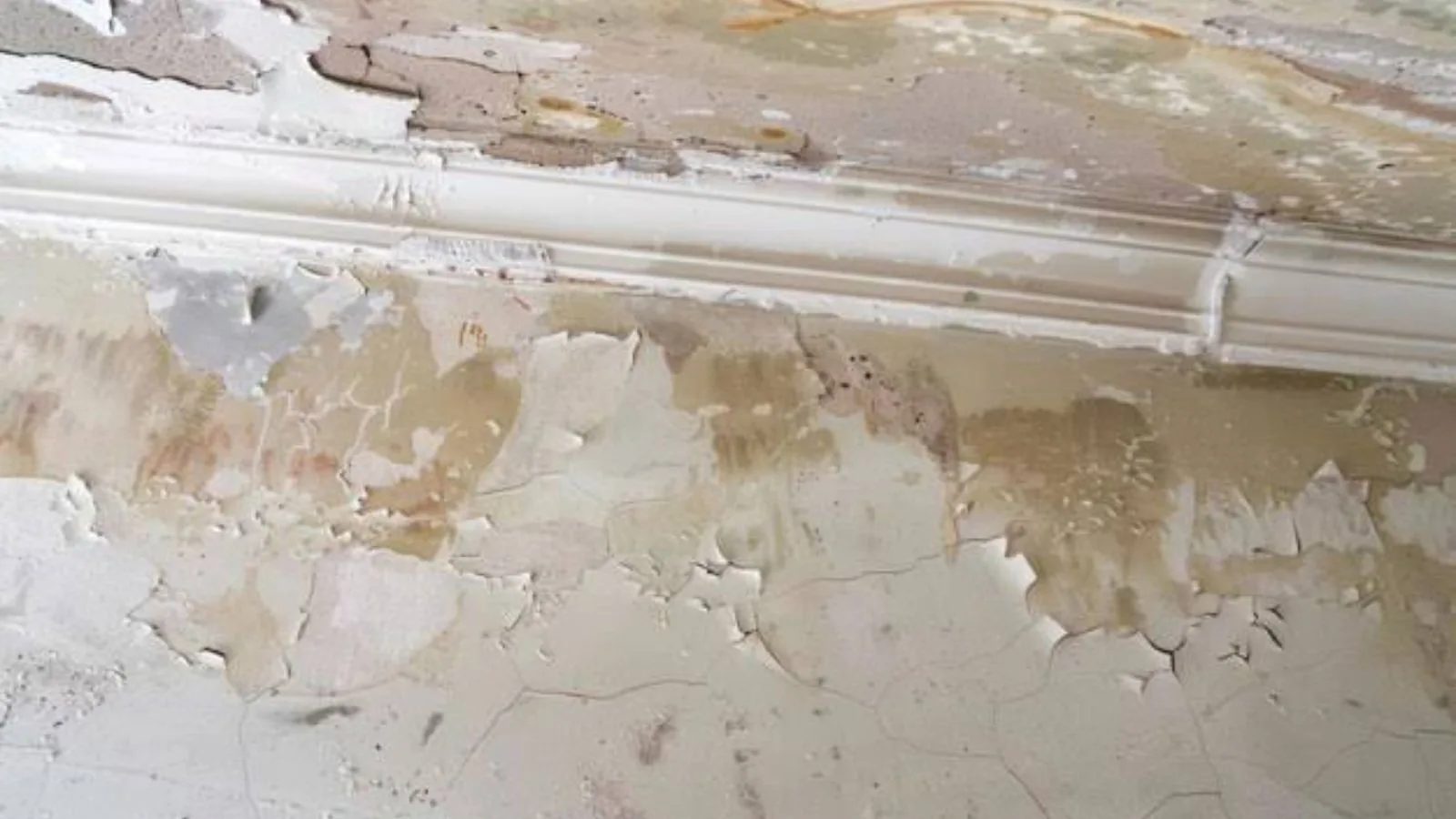
How water gets into a wall
Walls take water several ways. A leak in a pipe inside the wall soaks it from within. A roof or window leak runs down through the cavity. A flood or spill wicks water upward from the floor, since drywall is paper over gypsum and pulls moisture up like a wick. Water can climb well above the visible line.
Bubbling or peeling paint
Moisture behind the paint pushes it off the surface.
Soft or crumbling drywall
Saturated gypsum loses strength and can fall apart.
Stains and discoloration
Brown or yellow marks show where water has traveled.
Warped or lifting baseboards
Wood trim swells as it absorbs water.
Any of those signs means the wall deserves a moisture check, even if the surface looks mostly fine.
What gets dried and what gets cut out
| Condition | Usual path |
|---|---|
| Clean water, wall caught early | Dry in place with air movers and directed drying |
| Drywall soft, crumbling or saturated | Cut out and replace |
| Wet insulation in the cavity | Removed, since it holds water against the framing |
| Contaminated water (flood or sewage) | Drywall and insulation removed, framing cleaned and dried |
| Painted wall with stain only | Check moisture first, then seal and repaint if dry |
A common practice after flooding is a flood cut, where drywall is cut out a set height above the water line, often to two feet or more. It exposes the cavity to air and lets the crew dry the framing, and the removed section is later replaced.
How we handle a wet wall
- Map moisture with meters and thermal imaging so the wet area is clearly defined.
- Remove baseboards and, where required, small openings to reach the cavity.
- Dry the cavity with directed air or panels and run dehumidifiers in the room.
- Remove materials that cannot be dried and document the removal.
- Retest until the wall reads dry, then leave it ready for repair.
Drywall repair, texture and paint follow after drying. A wall closed up before it is dry holds moisture against the framing, which is why drying comes first.
Wall damp or drywall bubbling?
Call us. Tell us what you see and where the water came from, and we will explain the next step.
Older walls and what to ask
Older houses may have plaster over wood lath instead of drywall. Plaster takes water differently and can crumble or release from the lath. A moisture reading guides the decision. Homes built before 1978 may also contain lead-based paint, and federal renovation rules cover work that disturbs painted surfaces in housing of that age, so ask any contractor how they handle it before demolition.
Wall damage that started at the ceiling, such as from a roof or upstairs bathroom, is covered at ceiling water damage repair. A pipe in the wall is covered at burst pipe water damage.
Walls in South Orange homes
South Orange has many older houses. The Montrose Park Historic District holds homes built between about 1870 and 1930 in Queen Anne, Colonial Revival and Shingle styles. Walls in houses of that age can include plaster, later patches and newer drywall in renovated rooms, sometimes in a single room.
That mix makes moisture mapping useful. Readings on plaster, drywall and wood trim differ, and a stain on one surface may not show the extent of the water behind another. We note which material is where and compare against dry readings of the same material.
What the industry standard says
The ANSI/IICRC S500 standard guides the choice between drying a wall in place and removing material. It treats clean water caught early differently from long exposure or contaminated water, and it expects readings inside the wall, not only on the surface.
What to do before help arrives
- Turn off power to outlets in a wet wall at the panel before touching anything.
- Do not drill or cut into a wall that may hold wires.
- Move furniture a few feet away from the wet wall.
- Remove wall hangings and baseboard trim only if they come off easily.
- Photograph the wall and mark the edge of any stain.
These steps are about safety and keeping the damage from growing. They are not a substitute for the instructions of your utility, fire department or electrician.
What shapes the cost
Water category
Clean water leaves more drying options than contaminated water.
Height and length of wall wet
Wicking can carry water well above the visible stain.
Drywall or plaster
Plaster and lath behave differently from drywall.
Insulation
Wet insulation is removed.
Repair finish
Patching, texture and paint follow once the wall is dry.
Insurance note: coverage depends on your policy and on what caused the loss. The New Jersey Department of Banking and Insurance states that homeowners policies exclude water damage caused by flood, which needs separate flood coverage.
Want your real number? Call (973) 913-7965. We explain scope and price before work starts.
Frequently asked questions
Why is paint bubbling on my wall?
Moisture behind the paint is pushing it off the surface. It means the wall is wet or has been, and a moisture check shows how far it extends.
Can wet drywall be dried instead of replaced?
Sometimes. If the water was clean, the drywall is still firm and it is caught early, drying in place may work. Soft or crumbling drywall is replaced.
Why do you remove insulation?
Insulation absorbs water and holds it against the framing, and it rarely dries well inside a closed wall.
Do you repair and paint the drywall?
We dry the wall and remove what cannot be saved. Patching, texture and paint follow, and we can discuss the repair scope.
How can I tell if a wall is still wet?
It may feel cool or damp, smell musty or show staining, but a moisture meter is more reliable than touch.