
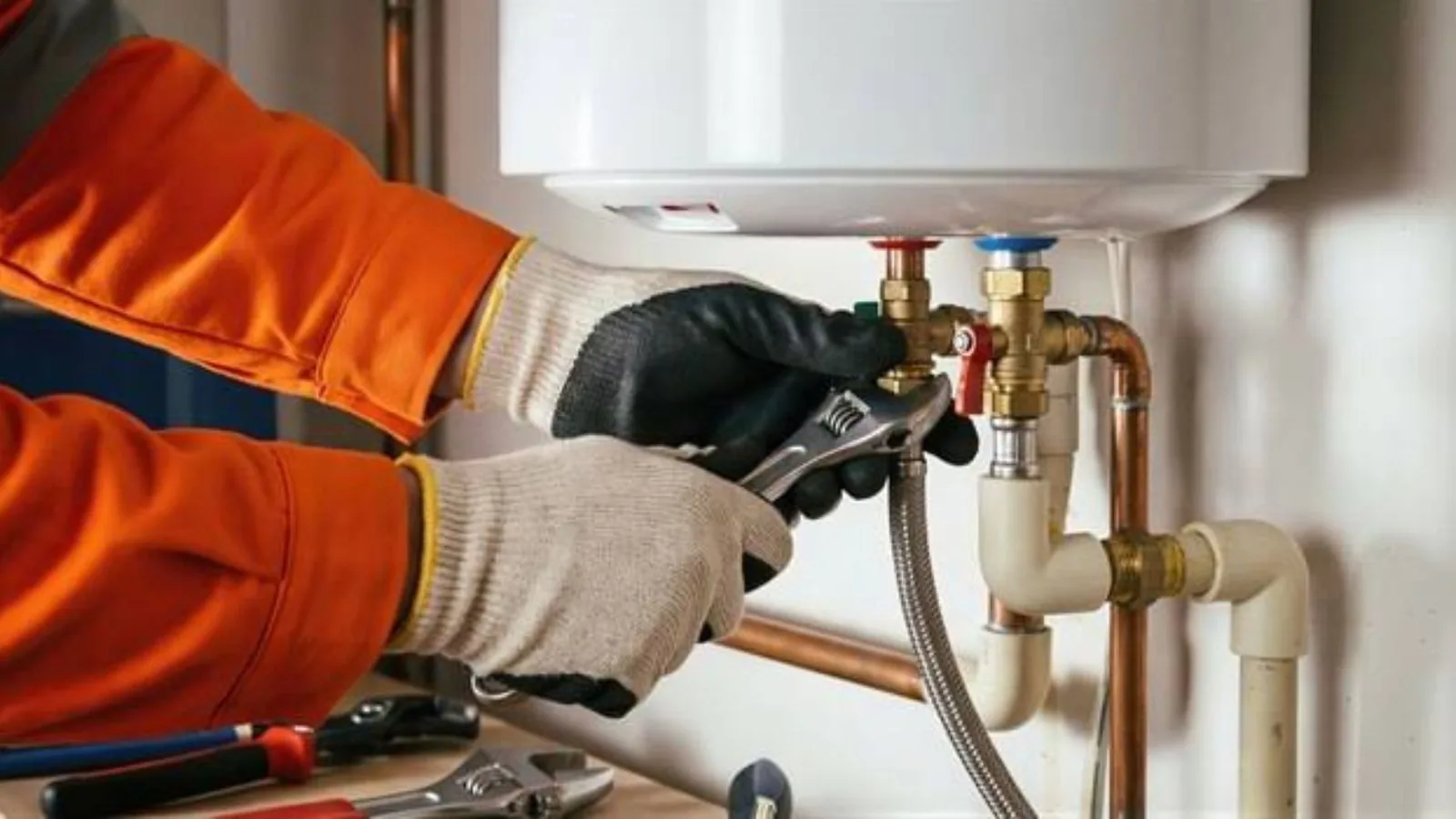
When a water heater is leaking right now
Heater leaks come in two types. A slow weep from a fitting or the drain valve is a repair. A leak from the tank body itself usually means the tank has failed, and water will keep coming until the tank empties or the supply is closed. Because many heaters sit in basements and utility closets, the water can spread unseen.
- Turn off the power at the breaker for an electric heater, or set a gas heater's control to off. If you smell gas, leave and call the gas utility or 911.
- Close the cold-water supply valve on top of the heater.
- Keep out of standing water near the unit and the electrical panel.
- Move stored items out of the wet area.
- Call our line. It is staffed 24/7, including nights and weekends.
Why tank leaks spread so far
A standard residential tank holds enough water to cover a finished basement floor in a thin sheet. That sheet reaches carpet edges, drywall bottoms, furnace platforms and stored boxes before most people notice. Water also finds floor drains, and in a house with a sump or floor drain the flow can disappear while the wet materials remain.
Utility closet
Water wicks into surrounding walls and flooring, and appliances next to the heater take on moisture.
Unfinished basement
Concrete dries slowly, and stored cardboard and wood absorb water.
Finished basement
Carpet, pad, baseboards and drywall bottoms all need attention. See basement water damage.
Attic or upper floor
Heaters above the ground floor send water through the ceiling below.
Water heater leaking now?
After you shut off power and water, call the 24/7 line. We will tell you what to do with the water until a crew arrives.
What a cleanup includes
Tank water is typically Category 1 when it escapes, though sediment from the tank can discolor it. The faster it is removed, the more material stays in place.
- Extract the water with pumps, extraction units or wet vacuums.
- Check the surrounding walls, flooring and cabinets with moisture meters.
- Remove materials that cannot be dried, such as soaked carpet pad or wet insulation.
- Set air movers and dehumidifiers and monitor readings until the area is dry.
- Document the loss, including the water heater's location and the damage extent.
A plumber replaces the heater. When we are on site we can coordinate around the plumber so the new unit is not set down on a wet floor.
A note on age and causes
Tank-style heaters wear out. Sediment, corrosion and a failing anode rod contribute, and the tank often gives little warning before it splits at a seam. Signs of trouble include rust-colored hot water, rumbling, moisture around the base and a pooled puddle that returns after wiping it up. Many manufacturers suggest flushing the tank yearly. Check your unit's label for its age.
A drain pan with a line to a floor drain, or a leak alarm on the floor next to the heater, gives an early warning. If the heater sits above living space, the pan matters even more. Related appliances such as washers and dishwashers fail in different ways, covered on the appliance leak page.
Water heater leaks in South Orange basements
South Orange's older homes often locate the heater in the basement or a utility room near the foundation wall. When heavy rain or river flooding is also a concern, a heater leak and groundwater can overlap, so we sort out the source before deciding the category. During the September 1, 2021 rainfall, basements across South Orange and Maplewood took on water from outside, which is a very different loss from a tank failure.
If the water in your basement is clear and your heater is wet at the base, the heater is probably the source. If it is dirty and rising from drains or the floor, treat it as outside water and see flood damage cleanup.
What shapes the cost
Tank volume released
A full tank releases more water than a partial leak.
Location
Basement, closet or upper floor affects where water spread.
Floor and wall materials
Finished carpet, drywall and trim need more than bare concrete.
Time before discovery
A leak found at once is smaller than one found after hours or days.
Drying needs
Equipment days follow the moisture map.
Insurance note: coverage depends on your policy and on what caused the loss. The New Jersey Department of Banking and Insurance states that homeowners policies exclude water damage caused by flood, which needs separate flood coverage. Many policies address a sudden tank failure but not gradual leakage over time, so your adjuster will want to know when it started.
Want your real number? Call (973) 913-7965 for scope and price before work starts.
Frequently asked questions
Do you handle water heater leak emergencies at night or on weekends in South Orange?
Yes. We answer 24/7. Close the heater's cold supply and shut off its power first, then call. We offer same-day response when available.
Can I just mop up a small puddle?
If the puddle is small and comes from a fitting, wiping it up and fixing the fitting may be enough. Water that keeps returning or comes from the tank body means the tank is failing and the area around it may be wet underneath.
How much water is in a water heater?
Residential tank heaters commonly hold 40 to 50 gallons, though sizes vary. Check the label on your unit.
Should the plumber or restoration crew come first?
Close the supply and power first. Then call both. The plumber replaces the heater and we handle the water, so calling at the same time keeps drying on schedule.
Will insurance cover the damage?
Many policies address a sudden failure, but wear and slow leaks are often treated differently. Your policy and adjuster decide, and we document the loss.