
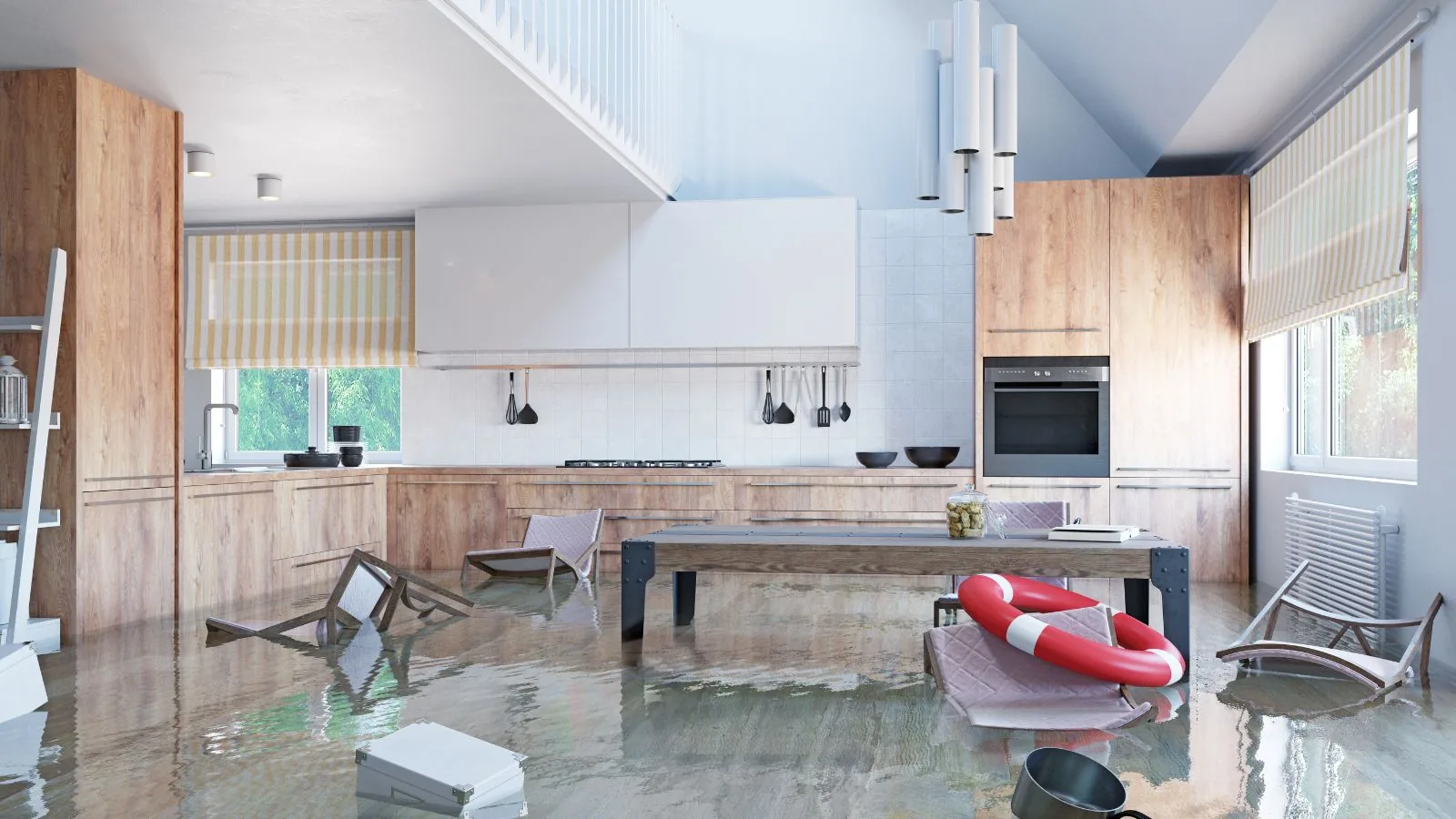
Where kitchen water damage starts
A kitchen packs plumbing into a small space. Sink drains, supply lines, a dishwasher connection, an ice-maker line and a garbage disposal all sit inside or behind cabinets. A pipe under the sink that fails can fill a cabinet base and run onto the floor before anyone notices, and a slow drip can soak the cabinet for weeks.
Most kitchen leaks share a pattern. Water collects in the lowest cabinet, soaks the particleboard floor of the cabinet, wicks up the sides and then flows under the cabinet toe kick toward the floor. The visible puddle is the last stage. A burst supply line is the emergency version, and the burst pipe page covers the shutoff steps.
What kitchen materials can and cannot take
| Material | How it reacts to water | Usual outcome |
|---|---|---|
| Particleboard cabinet base | Swells and crumbles when soaked | Often replaced if swollen or soft |
| Plywood and solid wood cabinets | Tolerate more moisture but can warp or stain | Often dried in place |
| Laminate countertop | Edges and seams swell at the substrate | Replaced if the substrate has swollen |
| Stone and solid-surface tops | Resist water but the cabinet below may not | Usually unaffected, cabinet below checked |
| Flooring under cabinets | Water collects below the cabinet base | Moisture readings decide |
Cabinet boxes built of particleboard, which are common in many kitchens, absorb water like a sponge and rarely return to shape. Solid wood and plywood have a better chance.
How we dry a kitchen
- Remove standing water and pull items out of the wet cabinets.
- Remove toe kicks and, where needed, drawer boxes and shelves so air can reach the interior.
- Check the cabinet base, drywall behind it and the floor with moisture meters and thermal imaging.
- Use directed drying with hoses or mats to push air into wall cavities and under cabinets.
- Monitor the readings and document the results for your claim.
Where cabinet boxes have swollen, we tell you which are worth keeping and which will need replacing. Countertops, appliances and fixtures can often be reconnected after the drying.
Kitchen leak under the sink or behind a cabinet?
Close the shutoff valve and call. We will tell you how to protect the cabinet and floor while you wait.
The sink, dishwasher and cabinet question
The cause decides which page applies. A failed dishwasher, refrigerator line or washing machine is an appliance failure, covered on the appliance leak page. A sink drain or supply-line leak, or water that soaked the cabinet and floor area, belongs here. A dripping line behind the wall may require opening the drywall, covered on the wall and drywall page.
Kitchen floors vary. Tile and vinyl dry well from the top but water can collect underneath. Hardwood next to the kitchen may cup, covered on the hardwood floor page.
Kitchens in South Orange houses
Kitchens in older homes are often renovated more than once. The Montrose Park Historic District holds houses built between about 1870 and 1930, and a kitchen in one of them may have a mix of original walls, newer cabinets and replaced plumbing. When old and new meet, a leak can hide behind a layer that looks newer than the structure around it.
Many South Orange kitchens have a basement or crawl space below, so water that gets through the floor can drip into the space beneath. If you see a stain on a basement ceiling under the kitchen, check both levels.
What the industry standard says
Kitchen losses follow the ANSI/IICRC S500 standard. Sink and dishwasher supply leaks are normally clean water at first, but the standard expects the crew to check cabinet toe kicks, subfloors and wall bases where moisture hides.
What to do before help arrives
- Close the shut-off valve under the sink or behind the dishwasher.
- Turn off power to the dishwasher and any wet outlets at the panel.
- Empty the cabinet under the sink and set items on a dry surface.
- Mop up shallow water so it does not travel under cabinets.
- Photograph the cabinets, floor and the source of the leak.
These steps are about safety and keeping the damage from growing. They are not a substitute for the instructions of your utility, fire department or electrician.
What shapes the cost
Cabinet material
Particleboard rarely survives a soak while plywood often does.
Time water sat
A slow leak over weeks affects more than a spill.
Floor type
Tile, vinyl, hardwood and laminate each respond differently.
Wall involvement
Water behind the wall adds opening and drying.
Equipment days
The moisture map sets the schedule.
Insurance note: coverage depends on your policy and on what caused the loss. The New Jersey Department of Banking and Insurance states that homeowners policies exclude water damage caused by flood, which needs separate flood coverage. Insurers often distinguish sudden leaks from long-term seepage, so the timeline helps.
Want your real number? Call (973) 913-7965. We explain scope and price before work starts.
Frequently asked questions
Can wet kitchen cabinets be saved?
Often, yes, if they are plywood or solid wood and are dried quickly. Particleboard boxes that have swollen usually need replacing. Moisture readings and a hands-on check decide.
Do I have to remove the countertop?
Not usually. Stone and solid-surface tops can stay. Laminate tops with swollen substrate may need replacing.
How do I know if water is behind the cabinets?
Signs include a musty smell, a warped toe kick, swollen edges and a soft floor. A moisture meter or thermal camera gives a firmer answer.
What should I do first after a sink leak?
Close the shutoff valve under the sink or the main, empty the cabinet and call us. Photograph the area before moving things.
Do you replace cabinets?
We dry and document the damage and identify what can be saved. Cabinet replacement is a repair task, which we can discuss during the scope.