
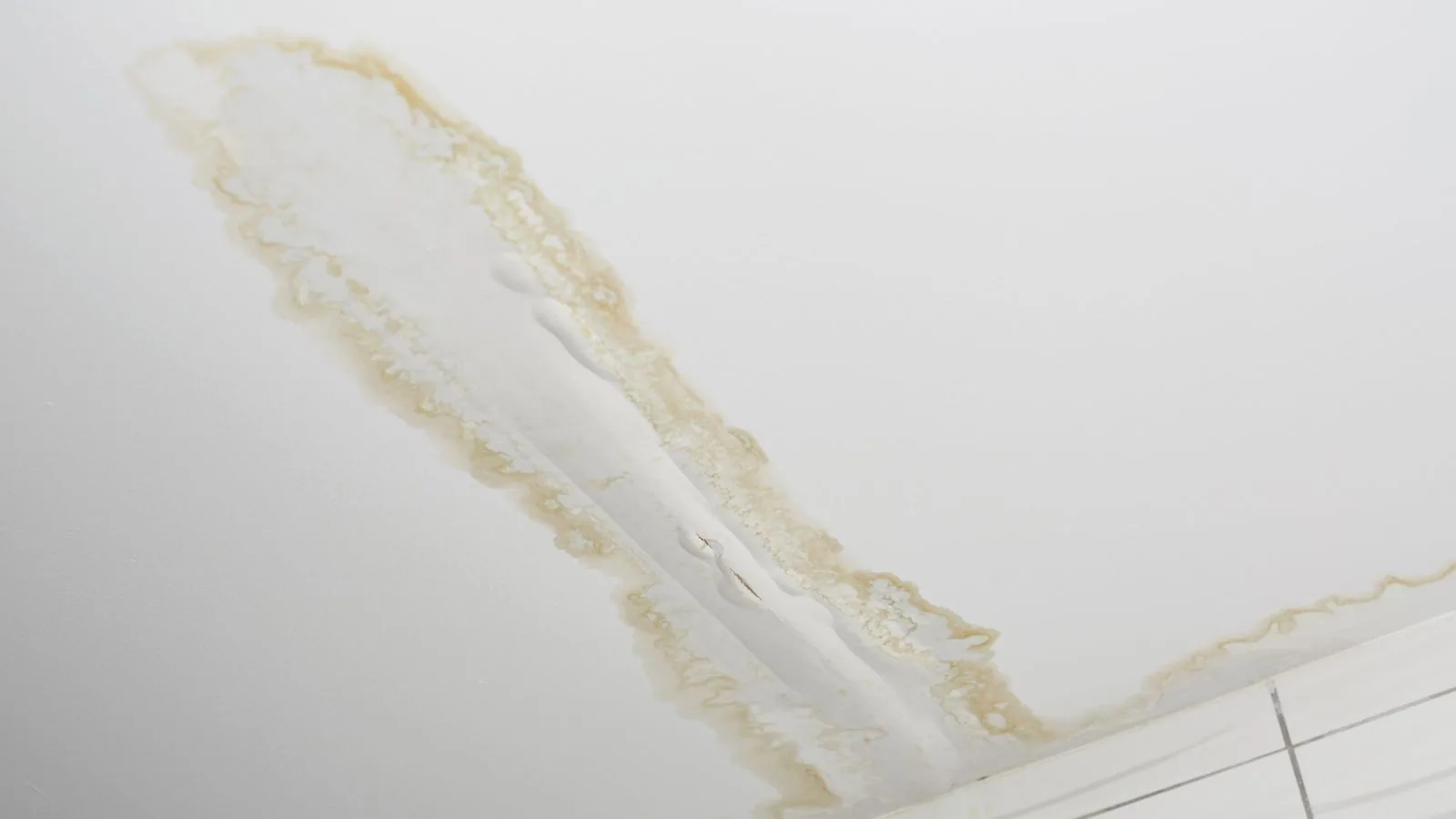
When a ceiling leak is an emergency
A ceiling that sags, bulges or drips can hold gallons of water. Drywall saturated with water is heavy and can come down without warning. Keep people and pets out from beneath it, and move furniture and electronics out of the room if you can do so safely.
- Stay out from under a bulging or sagging ceiling.
- Place buckets under active drips. If one spot is bulging with water, a small hole may release it into a bucket, but only if it is safe to stand there.
- Turn off power to lights and outlets in the room if you can reach the panel safely, and never touch a fixture wet with water.
- If a pipe is the source, close the main water valve.
- Photograph the stain, drips and the room from a distance.
Our 24/7 line takes calls from a home with water coming through a ceiling at any hour, and we offer same-day response when available.
Finding where the water came from
The stain on the ceiling is usually not the source. Water travels along joists and pipes before it shows. The cause decides the repair, so tracing it comes first.
Roof leak
Water enters through flashing, shingles or a vent and runs down through the decking and insulation. See the roof leak section below.
Upstairs bathroom
A failed toilet seal, tub drain or supply line leaks into the ceiling below.
Supply or drain line
A split in a line above the ceiling saturates the cavity quickly.
HVAC in the attic
A clogged condensate line or sweating duct drips onto insulation and drywall.
We use moisture meters and thermal imaging to follow the wet area, then tell you whether the source is plumbing, roofing or air conditioning, so the right trade makes the repair.
Roof leaks and ceilings
Many ceiling stains start at the roof. Water enters at a worn flashing, a lifted shingle, a plumbing vent boot or a chimney joint, runs down the underside of the decking and then soaks the attic insulation. By the time a stain appears, the insulation above has often absorbed much of the water.
Roof repair belongs to a roofer, and we do not replace roofing. Our part is the interior: removing wet insulation, drying the framing and ceiling drywall and repairing the ceiling once the source is fixed. For wind and heavy rain events that damage several areas, see storm water damage cleanup.
A temporary tarp over a damaged roof section is common after storms. Take photos of the damage and the tarp, because your insurer may ask for them.
Ceiling bulging or dripping?
Call the 24/7 line. Tell us what you see overhead and where the water seems to come from.
How we repair a water-damaged ceiling
- Release trapped water safely and remove drywall that is sagging or saturated.
- Remove wet insulation above it, since insulation holds water against the framing.
- Dry the joists and surrounding cavity with air movers and dehumidifiers, with moisture readings to confirm it.
- Hand over a dry, open or patched ceiling ready for new drywall, texture and paint.
- Provide documentation for your insurance claim.
Drywall that is only stained but still firm can sometimes be dried and sealed instead of replaced. A stain by itself does not mean the board must be cut out. Moisture readings decide, and a stain blocker plus paint usually follows. When wet drywall is on a wall as well as the ceiling, see wall and drywall water damage repair.
Ceiling water damage in South Orange homes
Many South Orange houses run two stories or more, including the Queen Anne, Colonial Revival and Shingle-style homes of the Montrose Park Historic District. Those layers add paths for water: a bathroom over a living room, an attic with old and newer insulation and plumbing runs through several floors. A leak at the top can drop through every level.
Heavy rain adds roof stress. Newark airport averages about 123 days a year with measurable precipitation, so roofs, flashing and gutters carry water much of the year. Clearing gutters and checking flashing before storm season is covered in the storm preparation guide.
What the industry standard says
The ANSI/IICRC S500 water damage standard is the industry reference for how wet ceilings are assessed. It treats the source and the contact time as the key facts, and it expects moisture readings in the cavity above before a decision is made to dry in place or open the ceiling.
What to do before help arrives
- Move people and furniture out from under a bulging or dripping ceiling.
- Place a bucket under the drip and use a pin to relieve a small bulge only if it is safe to stand there.
- Turn off the light fixture and any fan in the wet area at the wall switch.
- Do not touch wet fixtures, and keep children away.
- Photograph the stain and mark its edge with a pencil to see if it spreads.
These steps are about safety and keeping the damage from growing. They are not a substitute for the instructions of your utility, fire department or electrician.
What shapes the cost
Source and access
An attic leak with open access differs from a line buried in a finished ceiling.
Area affected
Square footage of drywall and insulation sets labor.
Insulation and framing
Wet insulation is removed and framing dried.
Number of rooms below
Water that traveled down walls adds work.
Repair finish
Drywall, texture and paint follow once the structure is dry.
Insurance note: coverage depends on your policy and on what caused the loss. The New Jersey Department of Banking and Insurance states that homeowners policies exclude water damage caused by flood, which needs separate flood coverage. Roof leaks from storm damage and sudden plumbing failures are often treated differently from long-term seepage, so ask your agent how your policy views the cause.
Want your real number? Call (973) 913-7965. We explain the scope and price before work starts.
Frequently asked questions
Do you handle ceiling water damage emergencies at night or on weekends in South Orange?
Yes. The 24/7 line is open on nights, weekends and holidays. We offer same-day response when available, and we can walk you through keeping the room safe while you wait.
Is a sagging ceiling dangerous?
It can be. Wet drywall is heavy and can drop suddenly. Stay out from underneath it and keep others away until it has been released or removed.
Do I need to replace drywall with a brown stain?
Not always. If the drywall is dry and firm, it can sometimes be sealed and painted. Moisture readings show whether it is still wet inside.
Can you fix my roof leak?
We handle the interior water damage, including wet insulation, framing and ceiling repair. A roofing contractor repairs the roof itself.
What if the water is coming from an upstairs bathroom?
Shut off the supply to the fixture or the main, then call us and a plumber. We dry the ceiling and cavity below and document the damage for your insurer.