
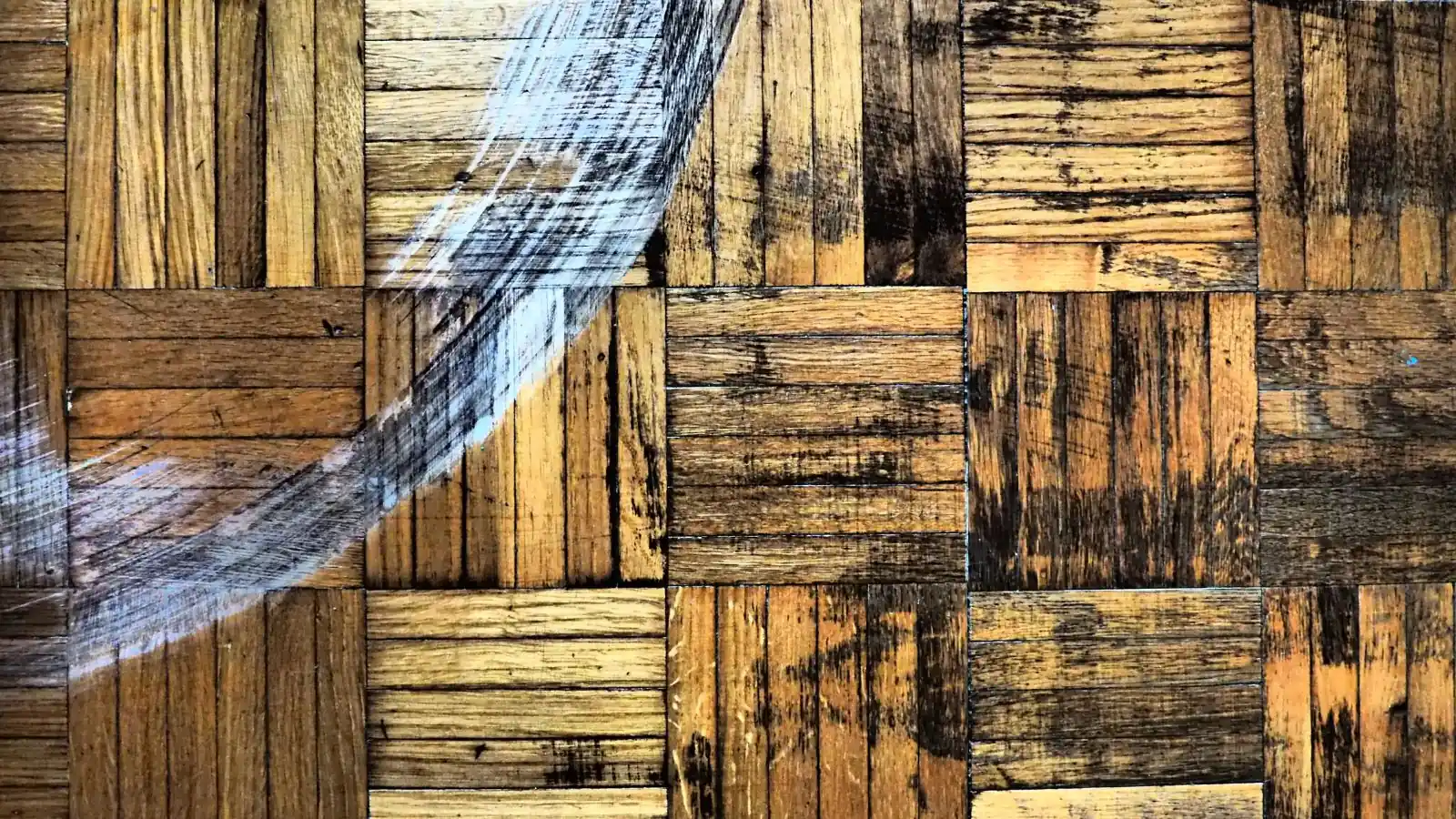
What water does to a wood floor
Wood is porous and takes up water through its edges and underside. As the boards absorb moisture they expand, and the way they change shape tells you something about where the water came from. Cupping happens when the edges rise higher than the center, which usually means moisture entered from below. Crowning is the reverse, which can appear after a cupped floor is sanded too soon. Buckling is the most severe case, when boards lift off the subfloor.
Cupping
Board edges rise above the center. Common after a slow leak or damp subfloor.
Crowning
Center rises above the edges, often from sanding before the floor was dry.
Buckling
Boards lift off the subfloor, often after significant flooding.
Staining and gaps
Dark marks, finish clouding and gaps as the boards dry and shrink.
Hardwood that is dried promptly has a much better chance of recovering than floor left wet for days.
How we dry hardwood
A wood floor dries slowly and has to be dried evenly. Fast drying can split boards and slow drying invites staining and odor. The goal is to bring the floor back to its normal moisture content, which is compared against an unaffected reference area of the same wood.
- Remove standing water and check the floor, subfloor and wall base with moisture meters.
- Use drying mats or panels that pull moisture out through the surface, with dehumidifiers controlling the room.
- Where water is trapped below, drill small vents or lift a few boards to reach the subfloor.
- Check the readings on each visit and adjust the equipment.
- Wait for the floor to stabilize before any sanding or refinishing.
A floor often cups worse as it dries before it settles. Waiting for it to stabilize and for readings to return to normal prevents a second round of damage from premature refinishing.
Floor wet, cupping or starting to lift?
Call the line. Tell us the flooring type and how long it has been wet, and we will explain what to do first.
Save, refinish or replace
| Condition | Usual path |
|---|---|
| Surface wet, boards flat, caught quickly | Dry in place, then reassess the finish |
| Mild cupping, dried within days | Dry, wait for it to settle, sand and refinish |
| Severe cupping or buckling | Replace affected boards, possibly sections |
| Engineered or laminate flooring | Often replaced if layers have separated |
| Flooring over a wet slab or crawl space | Fix the moisture source first, then reassess |
Solid hardwood can be sanded and refinished several times, which gives it more recovery options than engineered or laminate flooring. Floors laid over the same wet source that soaked them need that source fixed first, such as a slab leak or a wet crawl space.
Hardwood in older South Orange homes
Houses of the era found in the Montrose Park Historic District, built between about 1870 and 1930, often have solid wood floors that can be refinished more than once. That works in your favor after a leak, since a solid board that has dried and settled can often be sanded and finished. An older subfloor beneath, though, may be plank or board sheathing, which dries differently from modern plywood.
Seasonal humidity also affects wood. Newark airport averages about 123 days a year with measurable precipitation, and summer humidity can slow drying. A running dehumidifier helps the floor settle.
Sources that start in other rooms
Many floor jobs begin elsewhere. A dishwasher or washing machine leak in an adjacent room can send water under hardwood, so the appliance leak page covers the usual causes. For a kitchen layout, see kitchen water damage. A ceiling leak from above that drips onto the floor is covered at ceiling water damage repair.
What the industry standard says
Wood floors are a special case in the ANSI/IICRC S500 water damage standard because they take up and release moisture slowly. The standard supports measured, gradual drying with readings over several days instead of fast heat that can crack boards.
What shapes the cost
Species and construction
Solid, engineered and laminate floors behave differently.
Area wet
Square footage sets drying equipment and labor.
Time wet
Floors left wet for days are harder to save.
Subfloor condition
A wet subfloor can add opening and drying.
Refinishing scope
Sanding and finish come after the floor is dry.
Insurance note: coverage depends on your policy and on what caused the loss. The New Jersey Department of Banking and Insurance states that homeowners policies exclude water damage caused by flood, which needs separate flood coverage.
Want your real number? Call (973) 913-7965. We explain scope and price before work starts.
Frequently asked questions
Why is my hardwood floor cupping after a leak?
Boards absorb moisture from below and expand, so the edges rise. It often means the subfloor or the air under the floor was damp.
Can a cupped floor go back to flat?
Often, if it is dried slowly and evenly and given time to settle. Sanding too soon can leave the floor crowned.
How long does hardwood take to dry?
It depends on the wood, the area and the conditions, and it usually takes days or longer. Readings show when it has returned to normal.
Should I refinish right away?
No. Wait until the floor has stabilized, because refinishing a floor that is still moving can lock in problems.
What if my floor is engineered or laminate?
These layered products are more likely to separate or swell and often need replacing. We check and tell you honestly.