
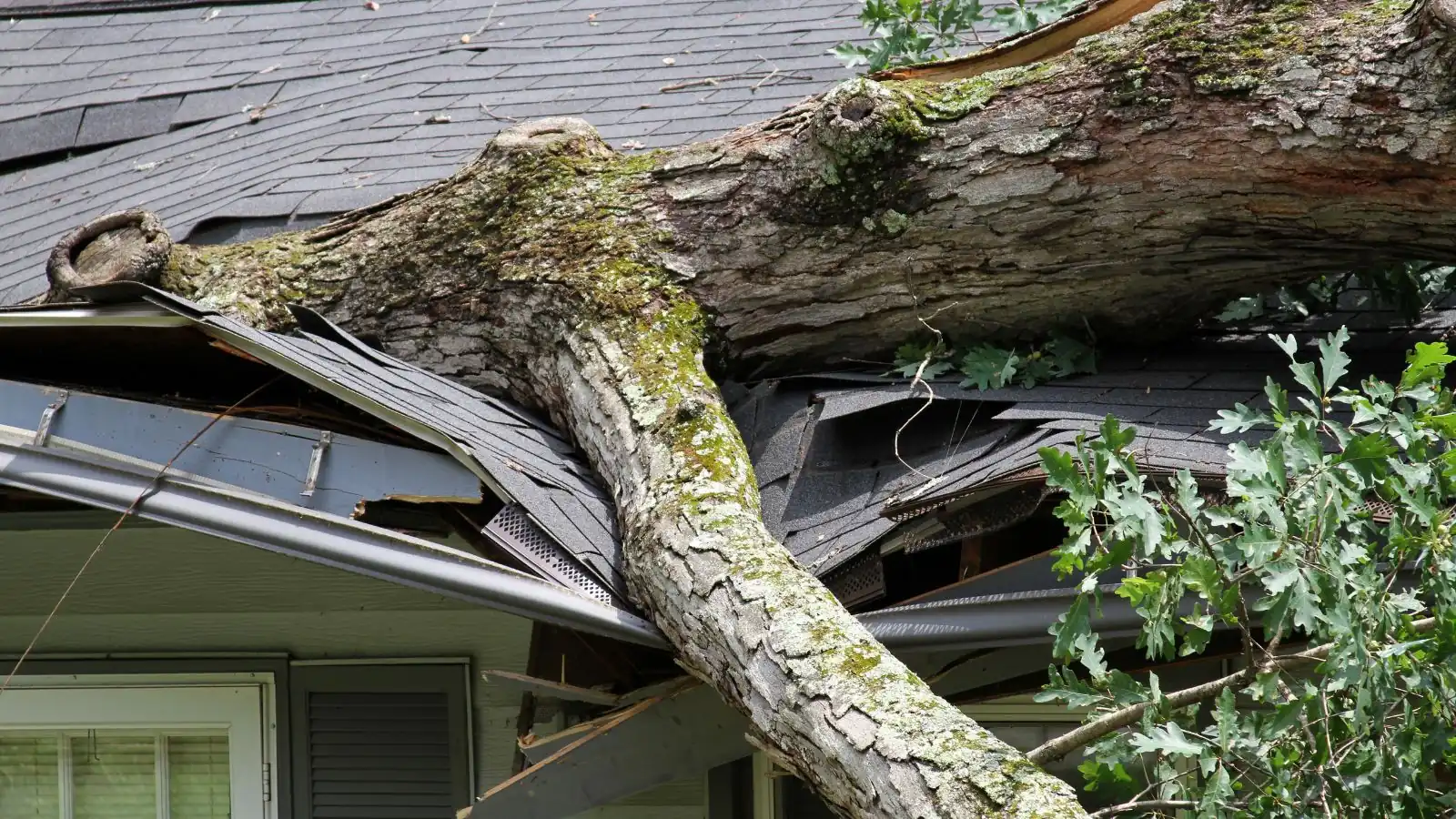
When storm water is inside your home
Storm damage differs from flooding. Storm water usually enters from above or through the sides of the building, through a damaged roof, a broken window, failed flashing or a wind-lifted siding panel. It soaks insulation, ceilings and walls from the top down. Flooding, where water rises from the ground, is a separate problem and is covered on the flood damage page.
- Stay away from sagging ceilings and anything wet near electrical fixtures.
- If a tree or limb has hit the house, keep out of the affected rooms until it is safe.
- Cover openings with a tarp or plastic if you can do so safely, or ask a roofer to tarp.
- Photograph the damage before temporary repairs, then keep receipts.
- Call our 24/7 line for drying and documentation.
After a storm, we offer same-day response when available, and our line stays open overnight and on weekends.
How storms get water into a building
Roof and flashing
Shingles lift or tear, flashing around chimneys and vents loosens, and water runs under the surface.
Windows and doors
Wind-driven rain forces water past old seals and frames.
Siding and walls
Rain driven sideways enters through gaps and runs down inside the wall cavity.
Gutters and downspouts
Clogged gutters overflow and send water behind fascia and into soffits.
Insulation absorbs a lot of water, and the water shows later. A stain may appear a day or two after the storm.
What a storm water cleanup involves
- Check ceilings, walls and floors with moisture meters and thermal imaging.
- Remove wet insulation and drywall that cannot dry in place.
- Dry the structure with air movers and dehumidifiers and monitor readings.
- Leave the home ready for roof, window or siding repair by the proper trade.
- Provide photos and readings for your insurance claim.
We handle the interior. Roofers, window installers and tree services handle the exterior. For interior ceiling damage and roof leaks, see ceiling water damage repair.
Storm damage and water inside?
Call the 24/7 line. Tell us what the storm hit and where you see water.
Insurance after a storm
The New Jersey Department of Banking and Insurance says windstorm damage, including from hurricanes, is generally covered under a standard homeowners policy, though a deductible or other restriction may apply. Rising flood water is different and is excluded from homeowners policies. The state's storm guidance advises contacting your agent or insurer as soon as possible, taking photos before temporary repairs and saving receipts for emergency repairs.
Hurricane season runs from June 1 to November 30. Reading your policy before a storm, including your deductible, saves surprises. The storm preparation guide and the claims guide go through the details.
Storms in South Orange
South Orange sits on the East Branch of the Rahway River, and the Village says its low-lying areas are prone to flooding. During the remnants of Hurricane Ida on September 1, 2021, heavy rain flooded streets and basements across South Orange and Maplewood, and NJ Transit suspended rail service. That event was largely water rising from the ground, but storms like it also drive rain through roofs and walls.
The South Orange Office of Emergency Management asks residents to sign up for local alerts and to keep a few days of drinking water on hand. The Village's guidance also suggests clearing gutters, storm drains and curbside catch basins before storms. Wind exposure is higher on the ridge toward South Mountain Reservation than in the lower village.
What to do before help arrives
- Stay away from downed lines and anything touching them.
- Cover a roof or window opening with plastic sheeting only if you can do it from the ground or a safe spot.
- Move people away from sagging ceilings.
- Turn off power to wet areas at the panel when it is safe.
- Photograph the damage inside and out before cleanup starts.
These steps are about safety and keeping the damage from growing. They are not a substitute for the instructions of your utility, fire department or electrician.
What shapes the cost
Number of entry points
One failed flashing differs from several windows and a roof section.
Insulation and drywall wet
More wet material means more removal and drying.
Area and floors affected
Water that reached a second story adds scope.
Time before drying began
Water left overnight soaks deeper.
Exterior repairs
These are handled by other trades and priced separately.
Want your real number? Call (973) 913-7965. We explain scope and price before work starts.
Frequently asked questions
Do you handle storm water damage emergencies at night or on weekends in South Orange?
Yes. We answer 24/7 during and after storms, and offer same-day response when available.
Is storm damage covered by my homeowners policy?
New Jersey's insurance department says windstorm damage is generally covered, with possible deductibles or restrictions. Flood damage is excluded. Check your policy and call your agent.
Should I tarp the roof myself?
Only if you can do it safely. A roofer is the better choice on a steep or wet roof. Photograph the damage first and keep receipts.
How soon should drying begin?
As soon as possible. Insulation and drywall hold water and the damage deepens each day.
Do you repair roofs?
No. A roofing contractor repairs the roof. We dry and repair the interior water damage.