
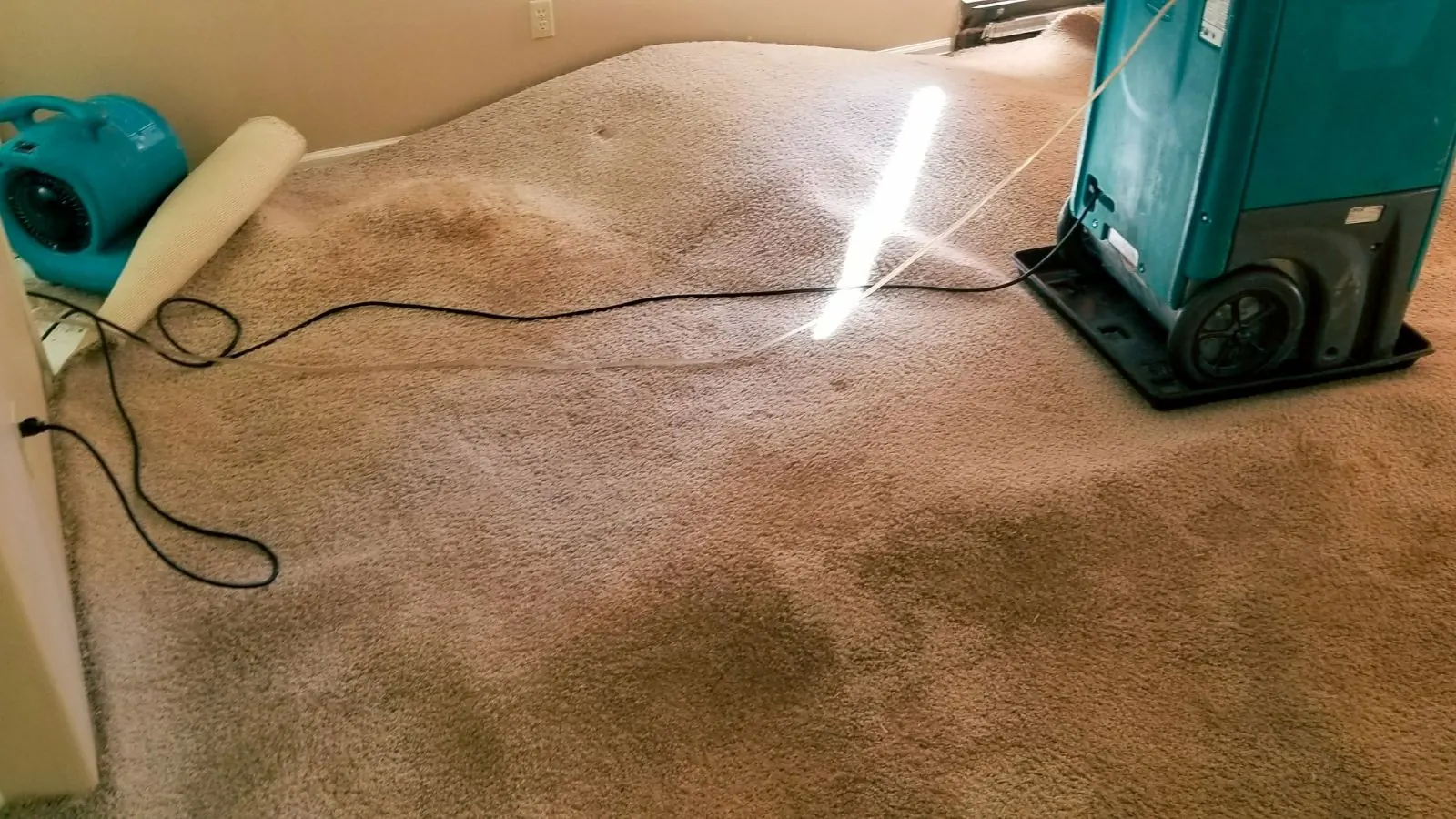
Carpet has two layers to think about
Carpet water damage is really carpet plus pad. The carpet is the surface you see. The pad beneath is foam or fiber that cushions it and soaks up water like a sponge. Both sit on the subfloor or a concrete slab, which can also hold moisture.
A carpet that looks dry on top can have a soaked pad beneath, so surface feel is a poor test. Moisture meters and a lift at a corner show what is happening underneath. The goal is to dry all three layers, and to decide quickly whether the pad is worth saving.
Clean water, gray water and contaminated water
| Water category | Carpet | Pad |
|---|---|---|
| Category 1: clean supply water | Usually extracted and dried in place | Often dried, sometimes replaced |
| Category 2: appliance or toilet discharge | Cleaned and dried, or replaced if it sat | Usually replaced |
| Category 3: sewage or flood water | Replaced | Replaced |
Under the ANSI/IICRC S500 standard, carpet soaked by contaminated water is not salvaged, and the sewage and flood pages explain why. Clean water that is extracted within a day or so gives carpet and pad the best chance.
How we dry wet carpet
- Extract water from the carpet and pad with a weighted wand and extraction unit.
- Lift a corner and check whether the pad and subfloor are wet, then remove the pad if it cannot dry.
- Use air movers to drive air across and under the carpet, and dehumidifiers to remove moisture from the room.
- Check readings on the subfloor and wall base until they match dry readings.
- Treat the carpet and the room for odor if it sat wet.
In some cases the carpet is lifted and dried separately from the pad. In others, a technique that raises the carpet and floats it over fresh pad is used, keeping the carpet while replacing the soaked cushion.
Carpet soaked and squishing underfoot?
Call us. Tell us where the water came from and how long it has been wet, and we will explain your options.
Stairs, edges and tack strip
Carpet is held down at the edges by tack strip, a wood strip with sharp pins that can absorb moisture and be hard to dry. Stair carpet, closets and corners hide water. Wet tack strip is often replaced because it holds moisture against the subfloor. Wall bottoms behind the carpet edge also wick water, so moisture checks reach the baseboards.
If the carpet sits over a concrete slab, the slab can hold water that keeps the pad wet from below. A slow leak from under the slab is covered on the slab leak page. For wood flooring, the hardwood page explains the differences.
Carpet in South Orange homes
Many South Orange houses have carpet in finished basements, bedrooms and stairs. Basements are the most exposed, since groundwater and appliance leaks both end up there. After the September 1, 2021 storm, residents across South Orange and Maplewood were bailing out basements, which put carpet and pad in many finished lower levels at risk.
In rentals, carpet that gets wet is often the landlord's responsibility, but the cause and the lease matter. Our rental guide explains how to document and notify.
What to do before help arrives
- Stop the water source first.
- Do not use a household vacuum on wet carpet, because it is an electrical hazard.
- Lift furniture legs off the carpet and place foil or plastic under them.
- Open windows if the weather allows and run fans on dry circuits.
- Stay off the wet area to avoid pushing water into the pad.
These steps are about safety and keeping the damage from growing. They are not a substitute for the instructions of your utility, fire department or electrician.
What shapes the cost
Water category
Clean water leaves more options than contaminated water.
Time wet
Carpet saved within a day or two has better odds.
Area
Square footage and stairs set labor.
Pad and tack strip
Replacing pad and tack strip adds material.
Drying and odor treatment
Duration and treatment follow the readings.
Insurance note: coverage depends on your policy and on what caused the loss. The New Jersey Department of Banking and Insurance states that homeowners policies exclude water damage caused by flood, which needs separate flood coverage.
Want your real number? Call (973) 913-7965. We explain scope and price before work starts.
Frequently asked questions
Can wet carpet be saved?
If the water was clean and it was extracted quickly, often yes. Contaminated water means replacement.
Do I need to replace the pad?
Often. Pad soaks up water and dries slowly, so many jobs replace it even when the carpet is kept.
How soon do I need to act?
As soon as possible. The first day or two decide whether carpet and pad dry cleanly or begin to smell.
What if the carpet smells musty?
A musty smell means moisture stayed in the carpet or beneath it. The musty smell guide explains the steps.
Is wet carpet over concrete a different problem?
Yes. Concrete can hold water for a long time, so the slab is checked along with the carpet.