
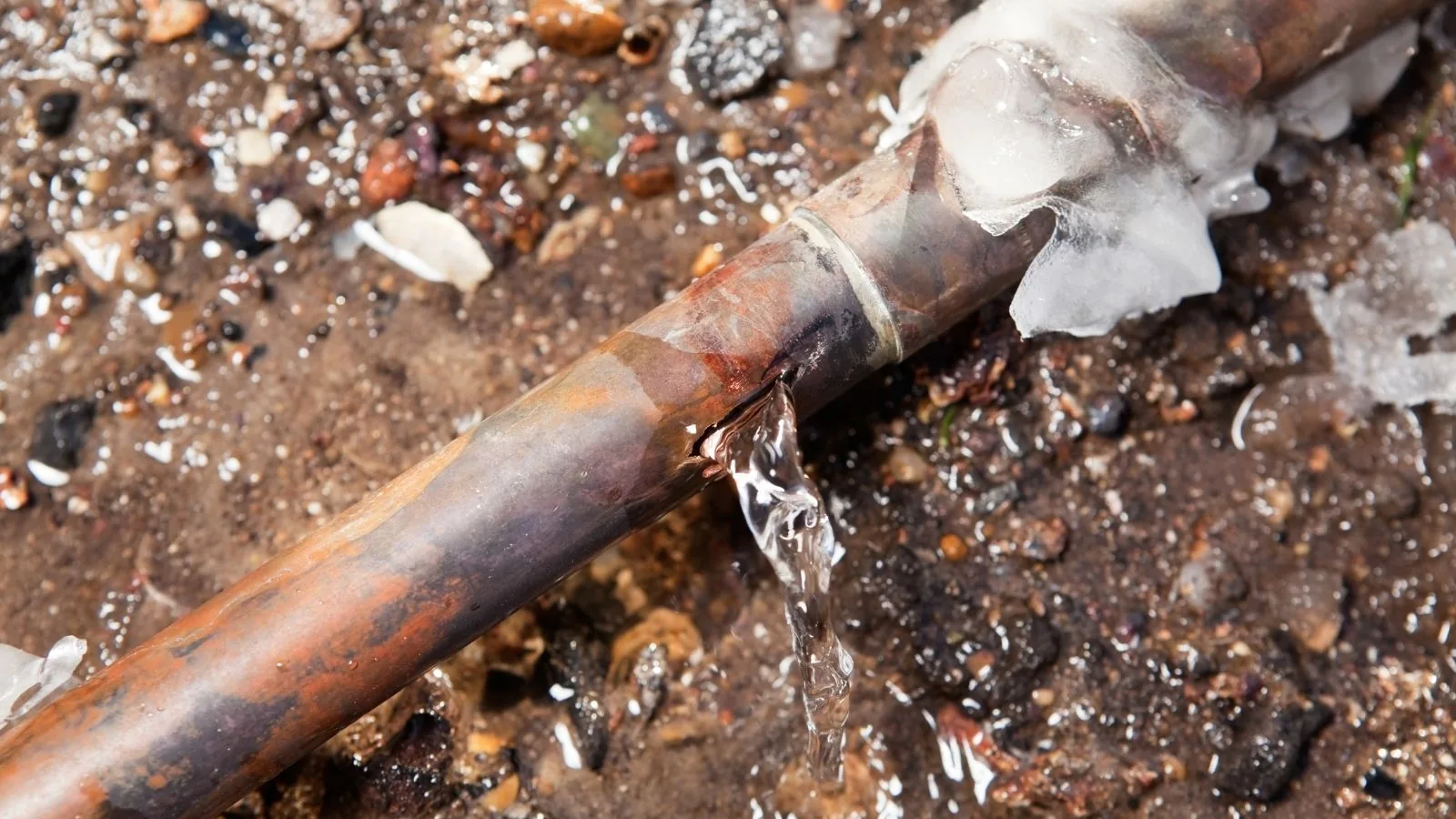
The short answer: sudden and accidental versus flood
Most homeowners policies cover water damage that is sudden and accidental. A supply line that splits, a water heater that fails or an appliance hose that bursts usually falls in that group. Damage from flood is a different matter. The New Jersey Department of Banking and Insurance states that homeowners policies exclude flood damage, so rising river water, surface water and similar events need a separate flood policy.
The wording of your own policy decides every case. Two homes in the same town can have different coverage, different deductibles and different exclusions. Read the water damage and exclusion sections, then ask your agent about anything unclear before a loss happens.
Water damage that is usually covered
- A pipe that bursts or splits inside a wall, floor or ceiling, including a frozen pipe that splits.
- A water heater, dishwasher, washing machine or refrigerator line that fails suddenly.
- Water that enters after a covered storm event damages the roof or a window, in many policies.
- The cost of tearing out and replacing wet materials that were damaged by a covered loss.
A sudden event usually gets a more favorable reading than a slow one. If the cause is a burst pipe, most adjusters will treat it as a classic covered loss. Your adjuster still confirms the cause and the extent of damage.
Water damage that is often not covered
| Situation | Usual treatment | What to ask |
|---|---|---|
| Flood from a river, rain runoff or surface water | Excluded from homeowners policies. Covered only by a separate flood policy. | Do I have a flood policy, and what is its waiting period? |
| Sewer or drain backup | Often excluded unless an endorsement was added. | Does my policy include water backup coverage? |
| Slow leaks over weeks or months | May be excluded as maintenance or long-term seepage. | How does my policy treat gradual damage? |
| Groundwater seepage through a foundation | Commonly excluded as a flood or ground-water event. | Is seepage covered under any endorsement? |
Water damage right now?
Call the 24/7 line. We can start the drying that your policy will want to see, and we will document what we find.
What coverage looks like in South Orange and Maplewood
The East Branch of the Rahway River runs through both South Orange and Maplewood, and the Village of South Orange notes that parts of the village are low-lying. When the remnants of Hurricane Ida passed through on September 1, 2021, residents of both towns reported basements full of water. Rain that comes in from outside is where the flood exclusion matters most.
If your house is in a low-lying area, ask your insurer about flood coverage before storm season. Residents of Maplewood and Newark face similar exposure on their own blocks, so the conversation is worth having wherever you live.
Local fact: wind, flood and the hurricane season
The New Jersey Department of Banking and Insurance says windstorm damage is generally covered by homeowners policies while flood damage is excluded.
Atlantic hurricane season runs from June 1 to November 30. A flood policy typically has a waiting period before it takes effect, so buying one during a storm warning is too late.
The department's consumer hotline is 1-800-446-7467 for questions about your coverage.
What to do in the first hour
- Stop the source of water if you can, and make the area safe.
- Take photos and video of the damage before you move anything.
- Call your insurer or agent to report the loss and ask what they need.
- Call a restoration company to extract water and start drying, since delay can raise the damage.
- Keep receipts for temporary repairs and anything you pay for the emergency.
Temporary repairs that protect the home from more damage are generally covered when the underlying loss is covered, so keep the receipts and photos. A water extraction crew will document moisture readings, which helps an adjuster understand what happened.
A quick way to check your own policy
Pull out the policy and look for three things. First, the section on water damage, which describes what counts as sudden and accidental. Second, the list of exclusions, where flood and sewer backup usually appear. Third, the endorsements, which are add-ons that may extend coverage for backup or sump pump failure. Write down the deductible beside each one.
Common wording to look for in a policy
Policies use their own language, so read it closely. Phrases such as sudden and accidental discharge usually describe covered events like a burst pipe. Phrases such as continuous or repeated seepage over a period of time often describe an exclusion. Words such as surface water, overflow of a body of water and ground water usually point to the flood exclusion.
If a phrase is unclear, ask your agent to explain it in plain language and to confirm the answer in writing. A short email now can save a long dispute later, and it also shows whether an endorsement for backup or sump pump failure is worth considering.
How restoration and your claim fit together
A restoration company and an insurance company do different jobs. We remove water, dry the structure and remove materials that cannot be saved. Your insurer decides what the policy pays. We can give you the drying records, photos and scope notes that most adjusters ask for, but we cannot promise what a policy will cover.
If your claim is denied or the payment seems low, ask for the reason in writing. The state insurance department takes consumer calls and can explain the process. Our flood damage restoration page explains the work after a flood, whatever the claim outcome.
Questions about your coverage? We cannot interpret your policy, but we can tell you what we find. Call (973) 913-7965 and we will start with the water.
Frequently asked questions
Does homeowners insurance cover a flooded basement in South Orange?
Usually not if the water came from outside as flood. The state insurance department says homeowners policies exclude flood, which needs separate coverage. A burst pipe in the basement is a different event, and may be covered.
Is a sewer backup covered?
Often only with an added endorsement. Ask your agent whether your policy includes water backup coverage, because many standard policies do not.
Will insurance pay for water extraction and drying?
If the loss is covered, the cost of extraction, drying and temporary repairs is usually part of the claim. Keep receipts and photos.
Who decides whether my loss is covered?
Your insurer, based on your policy. A restoration company documents the damage, but it does not decide coverage.
Does a river rising behind my house count as flood?
Yes. Water that comes in from a rising river or from surface runoff is flood, and it needs a separate flood policy. Check with your agent about coverage for homes near the East Branch.