
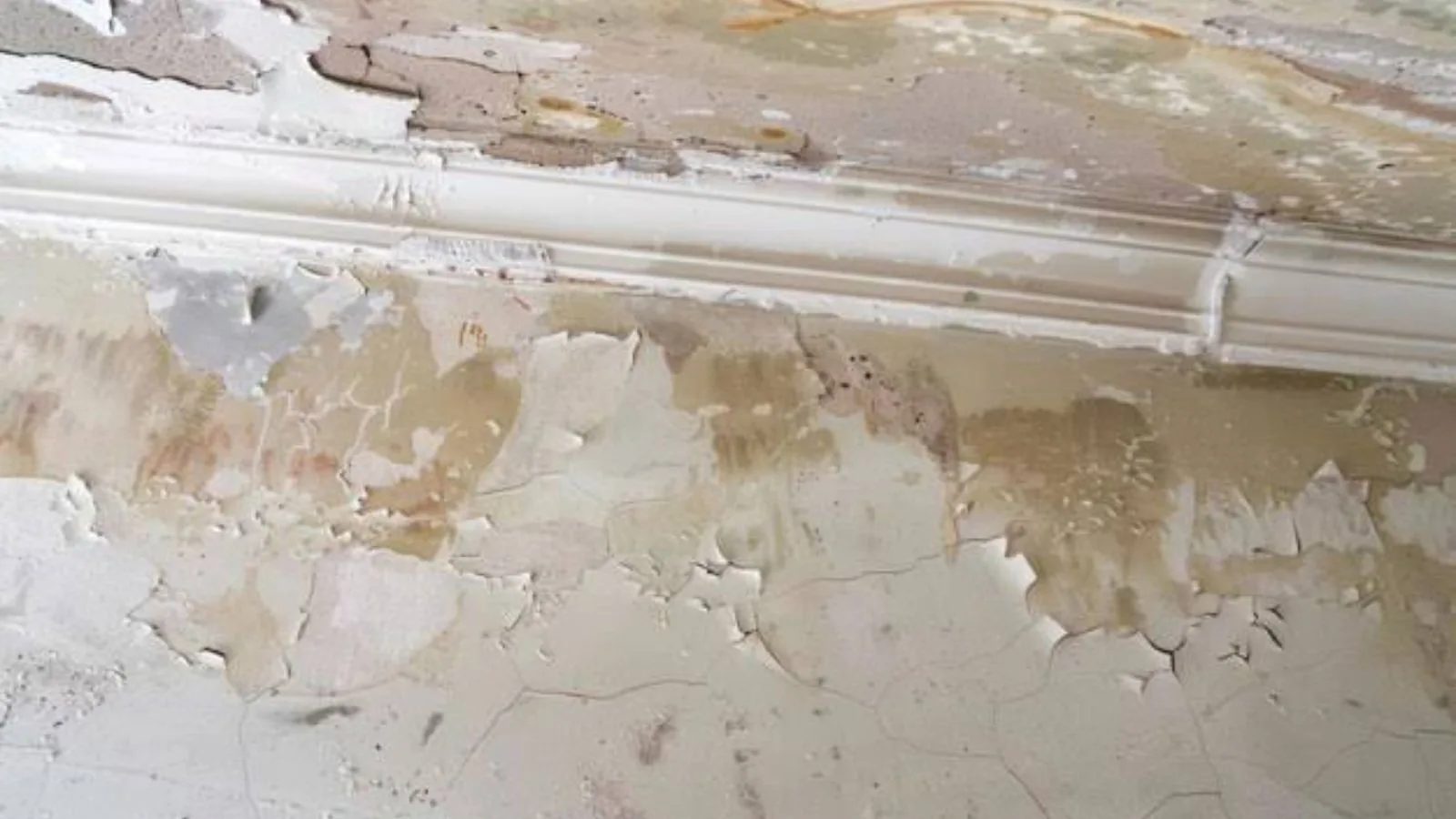
What moisture mapping is
Moisture mapping is the process of measuring how wet the materials in a building are and recording where. A technician walks the affected rooms with meters and a thermal camera, takes readings on floors, walls and ceilings and marks the wet boundary. The result is a map, drawn on a floor plan or a set of photos, that shows where the water went.
The map is the plan for the job. It tells the crew where to place air movers, where to remove wet material and where to leave things alone. It also becomes the baseline that later readings are compared against, so everyone can see whether the structure is drying.
The tools and what each one does
Pin moisture meters
Two probes measure electrical resistance between them and read moisture in wood and some other materials.
Pinless meters
Scan the surface without a puncture and read a zone behind it, which helps on finished floors and walls.
Thermal imaging cameras
Show temperature differences that suggest wet areas. Wet materials often run cooler as they evaporate.
Hygrometers
Measure the temperature and humidity of the air so the crew can set up drying equipment correctly.
No single tool tells the whole story. A thermal camera points to areas to check, and a meter confirms the reading. The air readings show whether the equipment is removing moisture or whether the room is catching up. That is why a trained technician uses all three.
Suspect hidden water behind a wall or under a floor?
Call the 24/7 line. We can check with meters and thermal imaging and tell you what we find.
How to read the numbers
Readings are comparative. A technician takes a reading from a material that was never wet, calls that the dry standard and compares the wet areas against it. Wood, drywall and concrete each read differently, so the scale matters less than the pattern across the room.
| Reading pattern | What it suggests | What the crew does |
|---|---|---|
| Wet at the floor edge, dry in the middle | Water wicked up from a spill or a wall base | Check wall cavities and remove the baseboard |
| Wet in a large area of the floor | Water spread under the surface | Extract, then check the subfloor and underlayment |
| Wet drywall above a dry floor | Leak from above or inside the wall | Trace the source and open the wall |
| Readings fall each visit | The structure is drying | Continue until the dry standard is reached |
| Readings stop falling | Moisture is trapped or a source remains | Adjust equipment or look for the source |
Why older homes ask for extra care
South Orange has a long stock of older houses. The Montrose Park Historic District, listed on the National Register in 1997, was built between about 1870 and 1930 in Colonial Revival, Shingle and Queen Anne styles. Older construction often has layers of plaster, wood framing and old flooring, and water can hide between layers and take longer to find.
A map helps in these houses because it limits how much has to be opened. Rather than guess, a crew reads the wall, finds where it turns dry and opens only what must be opened. The same approach helps in Maplewood and Newark, where older wood-framed houses are common too.
Local fact: the old houses of South Orange
Montrose Park Historic District was listed on the National Register of Historic Places on August 29, 1997.
Its houses date from about 1870 to 1930 and include Colonial Revival, Shingle and Queen Anne designs.
The district is bounded by South Orange Avenue, Sanford Avenue, Heywood Avenue and Holland Road.
What you can ask to see
You are entitled to see the map or the readings. Ask the technician to show you a wet reading next to a dry one so you can see the difference for yourself. Ask which rooms were mapped, which points will be revisited and what number the crew is aiming for. A technician who welcomes those questions is likely to do careful work.
Mapping after the equipment goes in
A map is a living record. After equipment is placed, the technician returns to the same points and records new readings. The numbers should fall each visit. When a reading stays high, the crew looks for a reason, such as a pocket of wet insulation or a slow leak from a pipe that was not found on the first day.
The final map shows every point at or near the dry standard. That page, with the photos, is the proof that drying is complete, and it is the document most insurers want to see.
What to do before the moisture check
- Stop the water source and keep the area as it is.
- Do not run heaters at the wet wall, because they can move moisture deeper.
- Note where you saw stains, bubbling paint or a musty odor.
- Move furniture back from walls so the crew can reach them.
- Write down when the leak started and when it stopped.
These steps are about safety and keeping the damage from growing. They are not a substitute for the instructions of your utility, fire department or electrician.
When mapping changes the plan
Sometimes a map shows that the damage is smaller than it looked. A stained ceiling may sit under a small leak that never reached the wall. Other times it shows that the damage is larger, such as water that traveled along a joist into the next room. Either way, the map saves money because it replaces guesswork with data.
Mapping continues during drying. A technician returns to the same points and records readings so you can see progress. The records support your claim, and they tell the crew when to remove equipment. The structural drying page explains the drying process in detail, and the wall and drywall repair page covers what happens when material has to come out.
Want a reading on a stain or a damp smell? Call (973) 913-7965 and ask for a moisture check.
Frequently asked questions
Can I map moisture myself with a home meter?
A basic meter can show a wet spot, but it cannot tell how far the moisture runs or whether a material is truly dry. A technician with thermal imaging and several meters gives a more reliable picture.
Does moisture mapping require tearing open walls?
Not always. Pinless meters and thermal cameras read through the surface. A wall is opened only when readings show water inside it.
How often are readings taken during drying?
Readings are taken on the first visit and again at each return visit, so progress can be compared to the starting map.
Why does an old South Orange house take longer to map?
Layers of plaster, old framing and past repairs can hide water. A careful read of each layer finds where it stops.
Is a thermal camera enough to confirm a leak?
No. It points to areas that may be wet, and a meter confirms the reading. We use both.