
Why water damage leaves a smell
A musty or earthy smell means organic material is staying damp. Wood, drywall paper, carpet pad and insulation all hold moisture, and damp organic material gives off odor as it breaks down. The smell is a symptom, and the cause is moisture trapped somewhere you cannot easily see.
That is why air fresheners and surface cleaners do not solve the problem. They cover the odor for a while, and the smell returns when the air warms or the humidity rises. The lasting fix is to find the wet material and dry it, or remove it if it cannot dry.
Where the moisture hides
Under carpet and pad
Carpet pad holds water like a sponge and dries slowly. A smell that grows in warm weather often starts here.
Inside walls
Water that ran down a wall can stay in the cavity behind the drywall, where air cannot reach it.
Beneath flooring
Wood and laminate floors can trap water under the surface, in the subfloor.
In basements and crawl spaces
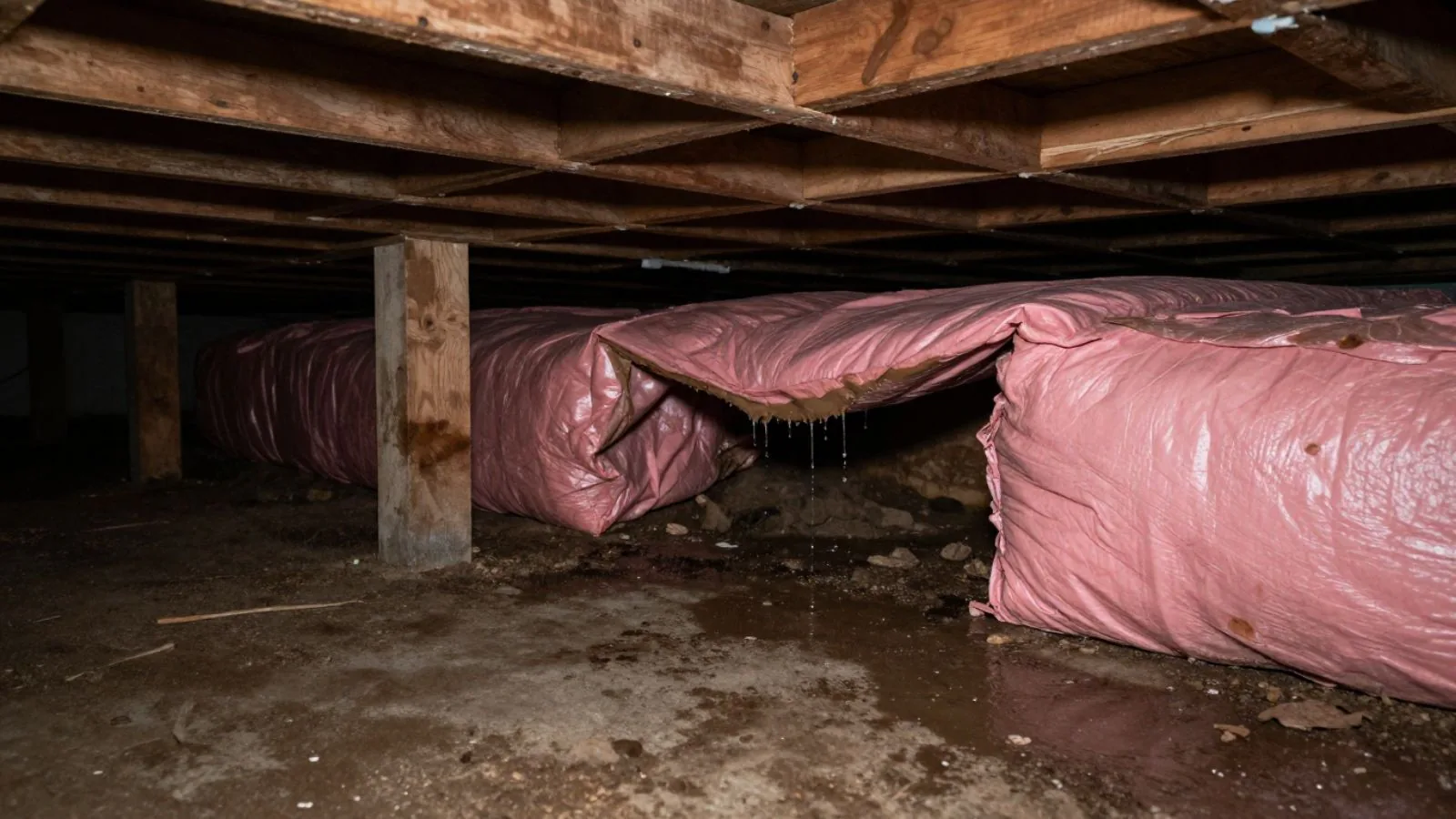
Damp air and standing moisture create a persistent smell that moves upstairs.
Behind cabinets and baseboards
Kickplates and baseboards cover gaps where water collects.
A moisture meter and thermal camera find these spots. A technician reads the area where the smell is strongest and works outward. The process is described in the structural drying guide.
Musty smell that will not go away?
Call the 24/7 line. We can check the area with moisture meters and thermal imaging and tell you what is wet.
What you can do before we arrive
- Find the strongest smell and note the room, the floor and the wall nearest it.
- Run a dehumidifier in the room and keep doors open so air moves.
- Pull back a corner of the carpet or open a cabinet to look, only where it is safe.
- Check for a source that is still leaking, such as a pipe, an appliance line or a window.
- Take photos and note when the smell started and what happened before.
A dehumidifier helps, but it will not dry materials that are soaked through. If the smell continues after a few days of dehumidifying, the moisture is likely trapped and a meter reading is the next step.
Why the smell can come back
A smell that returns after cleaning means the cause is still there. Moisture left in a subfloor or wall bottom feeds the odor every time humidity rises. Summer weather brings it back faster, because warm air carries more moisture and basements stay damp. Winter can hide the problem, then spring brings it back.
The remedy depends on what is wet. Carpet pad often has to go. Drywall that has stayed wet for days may need removal, and the wall and drywall repair page explains that process. A cleaner can remove surface odor only after the moisture is gone.
Why surface cleaning fails and what actually works
People often respond to a smell by scrubbing, spraying or running an air purifier. Those steps treat the air and the surface, but the odor source is inside the material. Water that soaked into pad, plaster or a subfloor is still there, and it keeps releasing odor as it slowly evaporates or breaks down organic matter.
What works is a sequence. First, find the wet area with meters. Second, remove the layer that cannot dry, such as soaked pad or a section of drywall. Third, dry the remaining structure to the dry standard with air movers and dehumidifiers. Fourth, clean the surfaces that remain, and only then judge whether any odor is left.
If odor remains after drying, it usually points to a layer that was missed, such as the underside of a floor or the inside of a cabinet base. A second round of readings finds it. The goal is a house that smells like the house again, and that comes from dry materials, not from covering up.
When to call for help
Call if the smell lasts more than a few days after a leak, if it is stronger in one room than another, or if you can see staining, swelling or peeling near the source. Call as well if the odor returns after cleaning or if you cannot find where it comes from. A quick check with meters usually answers the question.
You do not need to wait for a visible problem. A musty smell is often the first and only sign that something is wet. Finding it early keeps the repair small, and in many cases a short drying period is all that is needed.
A local note on humidity
Northern New Jersey has plenty of damp weather. Newark airport records show about 123 days a year with measurable precipitation, and summers are humid. Basements in South Orange, Maplewood and Millburn feel that, especially near the Rahway River's branches.
Local fact: how often it rains
The National Weather Service's Newark airport normals for 1991 to 2020 show about 123 days a year with measurable precipitation.
That frequency means basements and crawl spaces rarely get a long dry spell.
A basement that smells after rain is giving you a clue about where water enters.
To have a smell checked, call (973) 913-7965. We will ask where it is strongest and when it started, then explain what to expect.
Frequently asked questions
What causes a musty smell after water damage?
Damp organic material, such as wood, carpet pad, drywall paper and insulation. The smell shows that moisture is still trapped, and the lasting fix is to find and dry it.
Will a dehumidifier get rid of the smell?
It helps with humidity but cannot dry materials that are soaked through. If the smell continues, the moisture is likely trapped and needs a meter reading.
Why does the smell get worse in summer?
Warm, humid air carries more moisture, and damp materials release more odor as temperatures rise.
Can I just replace the carpet?
Replacing carpet without checking the subfloor and walls can leave the source behind. Find where the moisture is first.
Why do South Orange basements smell damp after rain?
Frequent precipitation and a river system running through the area keep the ground wet. Water can seep through the slab and wall base, and the smell follows.