
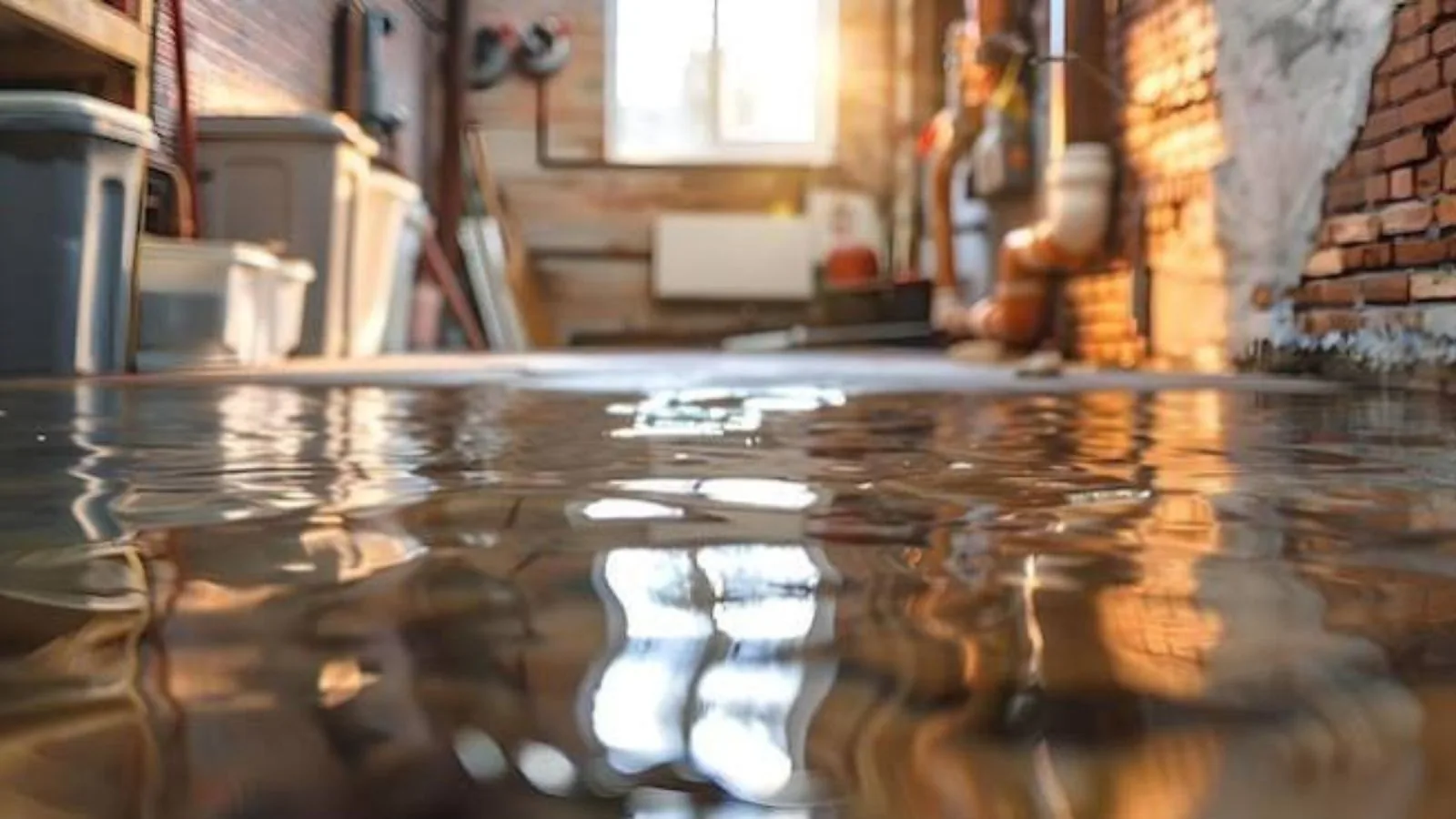
Winter: freezing temperatures and split pipes
Newark airport's 1991 to 2020 normals show about 21 days in January, 18 in February and 17 in December with a low at or below 32 degrees. March adds about 13 more. That is enough freezing weather to split exposed pipes in garages, exterior walls and unheated spaces. The leak often starts when the pipe thaws.
- Open cabinet doors under sinks on exterior walls on the coldest nights.
- Let a faucet drip when the forecast is far below freezing.
- Disconnect hoses and shut off outdoor spigots before the first freeze.
- Know where the main shutoff is, and test it before the cold arrives.
If a pipe does split, shut the main valve and call. The frozen pipe page and the burst pipe page explain the next steps.
Spring: runoff, saturated ground and roof leaks
Snowmelt and spring rain soak the ground around foundations. Basements that stayed dry in winter start to seep in March and April. Roofs that held snow can show leaks as it melts and flashing fails. Gutters filled with leaves from fall overflow and send water down the wall.
A spring checklist includes testing the sump pump, clearing gutters, checking the grade near the house and looking at the attic for stains. Check basement walls for damp lines or white mineral deposits, since these show where water has been coming in.
Seasonal water problem in your home?
Call the 24/7 line. We handle frozen pipes, storm water, appliance leaks and more at any time of year.
Summer: air conditioners, humidity and sudden storms
Air conditioners make condensate all summer, and a clogged line sends it into ceilings and closets. Summer thunderstorms bring short, intense rain that overloads drains. Humidity rises, and a basement that was fine in winter can feel damp. See AC leak water damage for the cooling side of the problem.
Washing machine hoses and dishwasher lines also fail in summer, partly because people are home more. Replace old rubber hoses with braided ones, and check hoses for bulges and cracks before a trip.
Fall: hurricane remnants and fallen leaves
Hurricane season runs from June 1 to November 30, and the worst of it for New Jersey often arrives in late summer and early fall. The remnants of Ida reached South Orange and Maplewood on September 1, 2021, and Millburn's downtown flooded when the Rahway overflowed. Leaves clog gutters and drains in October and November, and the overflow goes into the house.
| Season | Main risk | First check |
|---|---|---|
| Winter | Frozen and split pipes | Exterior wall plumbing and unheated spaces |
| Spring | Runoff and roof leaks | Sump pump, gutters and attic stains |
| Summer | AC condensate and appliance hoses | Condensate line, supply hoses and basement humidity |
| Fall | Storm remnants and clogged drains | Gutters, window wells and floor drain |
A simple yearly calendar
A calendar helps because water problems repeat on schedule. In October, clear gutters and window wells and disconnect outdoor hoses. In November, check the main shutoff and insulate exposed pipes in unheated spaces. In December and January, watch the forecast and open cabinet doors on the coldest nights.
In March, look at the attic and basement for new stains as snow melts. In April, test the sump pump and check the grade near the house. In May, service the air conditioner and flush its condensate line. In June, inspect washing machine and dishwasher hoses and replace any that are bulging or old.
In August and September, keep an eye on forecasts during the peak of hurricane season, and keep your documents and photos current. Putting one task in each month turns a long list into small jobs, and it means a problem is more likely to be found before it becomes a flood.
None of this guarantees that water will stay out, since pipes fail and storms exceed expectations. But a house that is checked each season gives you earlier warnings and smaller losses. When a problem does appear, you will already know where the valves are and which numbers to call.
Older houses and the seasons
Older houses face seasonal risks differently. Original pipes may be closer to exterior walls, windows may leak around old frames and basement walls may let in water after a wet spring. South Orange has many houses built in the late nineteenth and early twentieth centuries, and the Montrose Park Historic District was built between about 1870 and 1930.
A house of that age often has had several repairs over the years. Ask what was replaced and when, and watch for the places where old materials meet new ones. Those seams are where water tends to find a way in.
What the industry standard says
Seasonal planning lines up with the ANSI/IICRC S500 water damage standard, which stresses early action. Water that is removed and dried within the first day or two stays in a lower damage class than water left for a week.
What to do before each season turns
- Learn where the main water shut-off is and test that it turns.
- Clear gutters and downspouts before fall and again after leaves drop.
- Insulate exposed pipes in the garage, attic and crawl space before freezing weather.
- Check the sump pump by pouring water into the pit before storm season.
- Store your insurance policy number and a few emergency numbers in your phone.
These steps are about safety and keeping the damage from growing. They are not a substitute for the instructions of your utility, fire department or electrician.
What the local weather record shows
Newark airport averages about 123 days a year with measurable precipitation, so wet weather is a regular feature and not an exception. Homes in South Orange, Maplewood and Newark all see the same pattern, with local differences set by slope, soil and the age of the plumbing.
Local fact: the freezing record
The 1991 to 2020 normals at Newark airport show about 21 days in January with a low at or below 32 degrees.
February averages about 18 such days, December about 17 and March about 13.
Annual precipitation days average about 123.
Whatever the season, a quick response limits the damage. Call (973) 913-7965 and describe what you see.
Frequently asked questions
When do pipes freeze in South Orange?
Mostly from December through March. Newark airport averages about 21 days in January with a low at or below 32 degrees, and February and December add many more.
What is the biggest water risk in summer?
Air conditioner condensate lines, appliance hoses and short, intense thunderstorms that overload drains.
When is hurricane season in New Jersey?
From June 1 to November 30. The remnants of Ida reached the South Orange area on September 1, 2021.
How often does it rain in this area?
Newark airport averages about 123 days a year with measurable precipitation, so basements get little rest from wet weather.
What should I check each spring?
The sump pump, gutters, grade near the foundation, attic ceiling and basement walls. Look for damp lines or mineral deposits.