
Why the shutoff matters
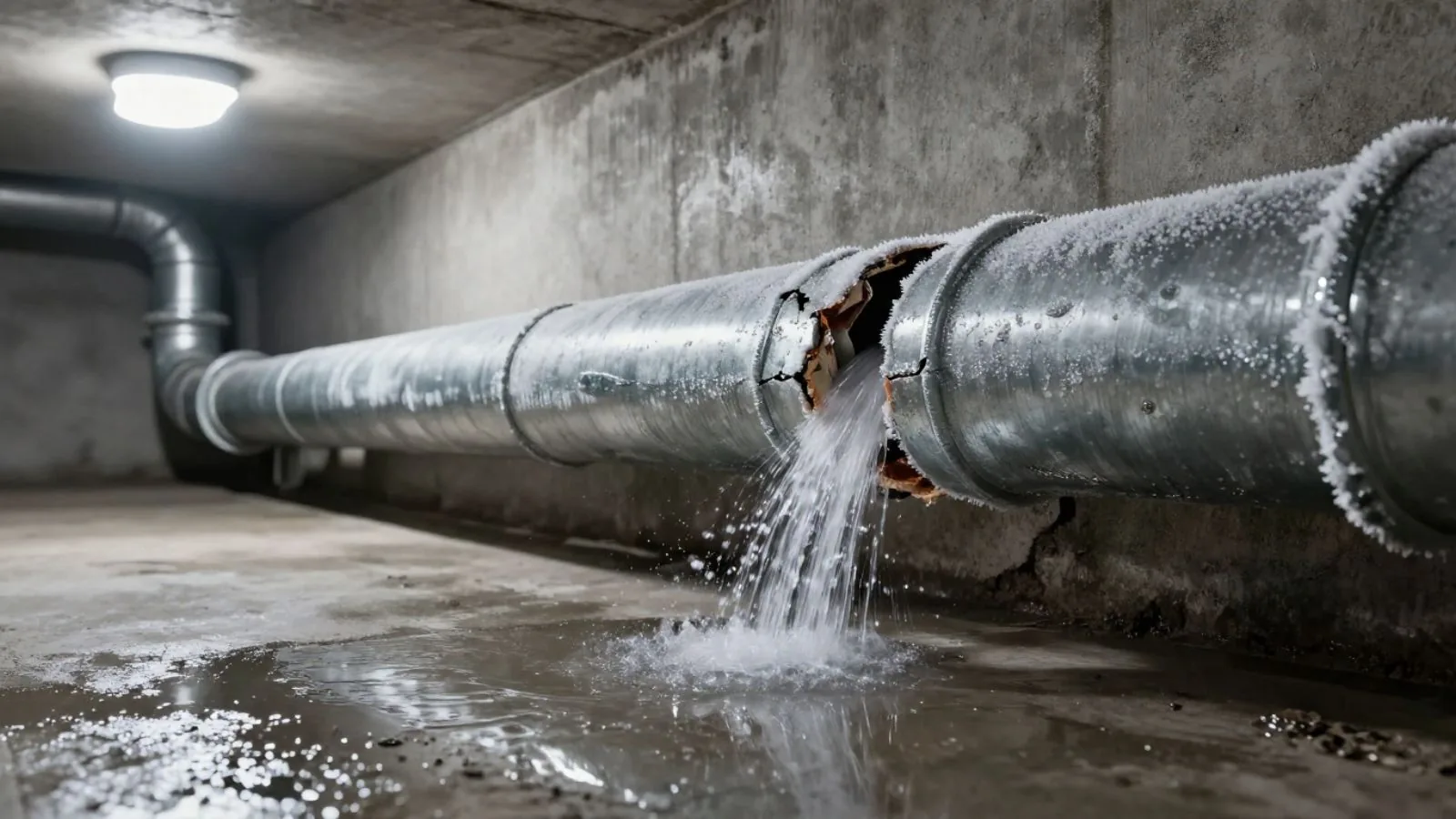
A supply pipe can release a surprising amount of water in a short time, and every minute adds to the damage. Water spreads into drywall, subfloors and insulation, and it finds its way to rooms below. Closing the main valve stops the flow into the house so the damage stops growing while you arrange help.
The main shutoff controls every fixture in the house. Individual fixture valves, such as the ones under a sink or behind a toilet, control only one. Use a fixture valve for a small leak at one fixture, and the main valve for anything bigger or when you cannot tell where the water is coming from.
Where to look for it
Near the water meter
Most homes have a shutoff where the line enters, often in the basement, a utility room or a garage.
Along the front wall
Look on the wall that faces the street, at about knee to chest height.
Near the water heater
In some homes the valve sits close to the heater or the pressure tank.
In a crawl space or closet
Apartments and condos may have the valve in a utility closet or at the entry to the unit.
Outside at the curb
A second valve near the street belongs to the utility, and homeowners should not operate it.
Follow the pipe from the meter and look for a round wheel handle or a lever. Mark the valve with a tag so anyone in the house can find it, even in the dark. A flashlight should be kept nearby.
Pipe burst or water pouring in?
Close the main valve if you can reach it safely, then call the 24/7 line. We will explain what to do next.
Closing the valve: two common types
| Valve type | How it looks | How to close it |
|---|---|---|
| Gate valve | A round wheel handle | Turn clockwise until it stops. It may take several full turns and can be stiff. |
| Ball valve | A straight lever handle | Turn the lever a quarter turn so it sits across the pipe. |
| Fixture stop | A small oval handle under a sink or behind a toilet | Turn clockwise until it stops. |
Turn gently. Old gate valves can break if forced, and a broken valve is a bigger emergency. If a valve will not move, do not use a wrench with great force. Call a plumber for a repair and the utility if the problem is at the meter.
What to do after the water is off
- Open a low faucet, such as one in a basement or first floor, to drain the lines.
- Turn off the water heater's power or gas if the tank may be draining or damaged.
- Stay away from outlets and the electrical panel if water has reached them.
- Move belongings out of the wet area and take photos.
- Call a plumber for the repair and a restoration company for the water.
A plumber repairs the pipe, and we handle the water and the drying. Our burst pipe page explains how the restoration side works, and the water heater leak page covers a tank failure.
Practice once a year
A valve that has not been turned in years may be stiff or stuck. Once a year, close the main valve fully and open it again to confirm it moves. Do this when no one is showering or running the dishwasher, and open a faucet afterward to let air out of the lines.
If the valve is hard to turn or leaks at the stem, call a plumber to replace it before an emergency. Many plumbers can swap an old gate valve for a ball valve, which is quicker to close. Tell everyone in the house where the valve is, including older children, so that more than one person can act in an emergency.
Fixture valves and appliance shutoffs
The main valve is not the only one worth knowing. Toilets, sinks, the washing machine, the dishwasher and the water heater each have their own shutoff. For a leak at a single fixture, closing that valve stops the water without turning off the whole house. Label them so anyone can find them.
Consider replacing old rubber washing machine hoses with braided stainless ones, and look at them every year. A hose failure is one of the most common sources of a sudden, large leak, and a quick shutoff limits the damage.
What the industry standard says
Shutting off the water is the first step in the ANSI/IICRC S500 water damage framework as well, because the standard begins with stopping the source. Once the water is off, the category of water and the time it has been present guide what comes next.
A note on the South Orange water system
Utility details can affect who you call. NJ American Water completed its purchase of the South Orange water system on October 7, 2025, and lead service line replacement began on January 20, 2026. If work is happening on your street, ask the utility about the service line and the curb valve, since those belong to the utility.
Local fact: who owns what
NJ American Water now operates the South Orange water system, after completing its purchase on October 7, 2025.
Lead service line replacement started on January 20, 2026.
The curb valve and the meter belong to the utility, so contact the utility if the problem is outside your house.
Homes in Maplewood and Newark have their own utilities, so ask who serves your street. Whatever the utility, test your main valve once a year. If it fails or a pipe bursts, call (973) 913-7965.
Frequently asked questions
Where is the main water shutoff in most homes?
Usually where the line enters the house, near the meter, in a basement, utility room or garage. Look along the wall that faces the street.
Which way do I turn the valve to close it?
Gate valves close clockwise, often with several turns. Ball valves close with a quarter turn of the lever so it sits across the pipe.
Should I use the valve at the curb?
No. The curb valve belongs to the utility. Use the valve inside the house, and call the utility if the problem is outside.
Who runs the South Orange water system now?
NJ American Water completed its purchase of the system on October 7, 2025. Lead service line replacement began on January 20, 2026.
What if the valve will not turn?
Do not force it with a large wrench. Call a plumber, and call us for the water already in the house.