
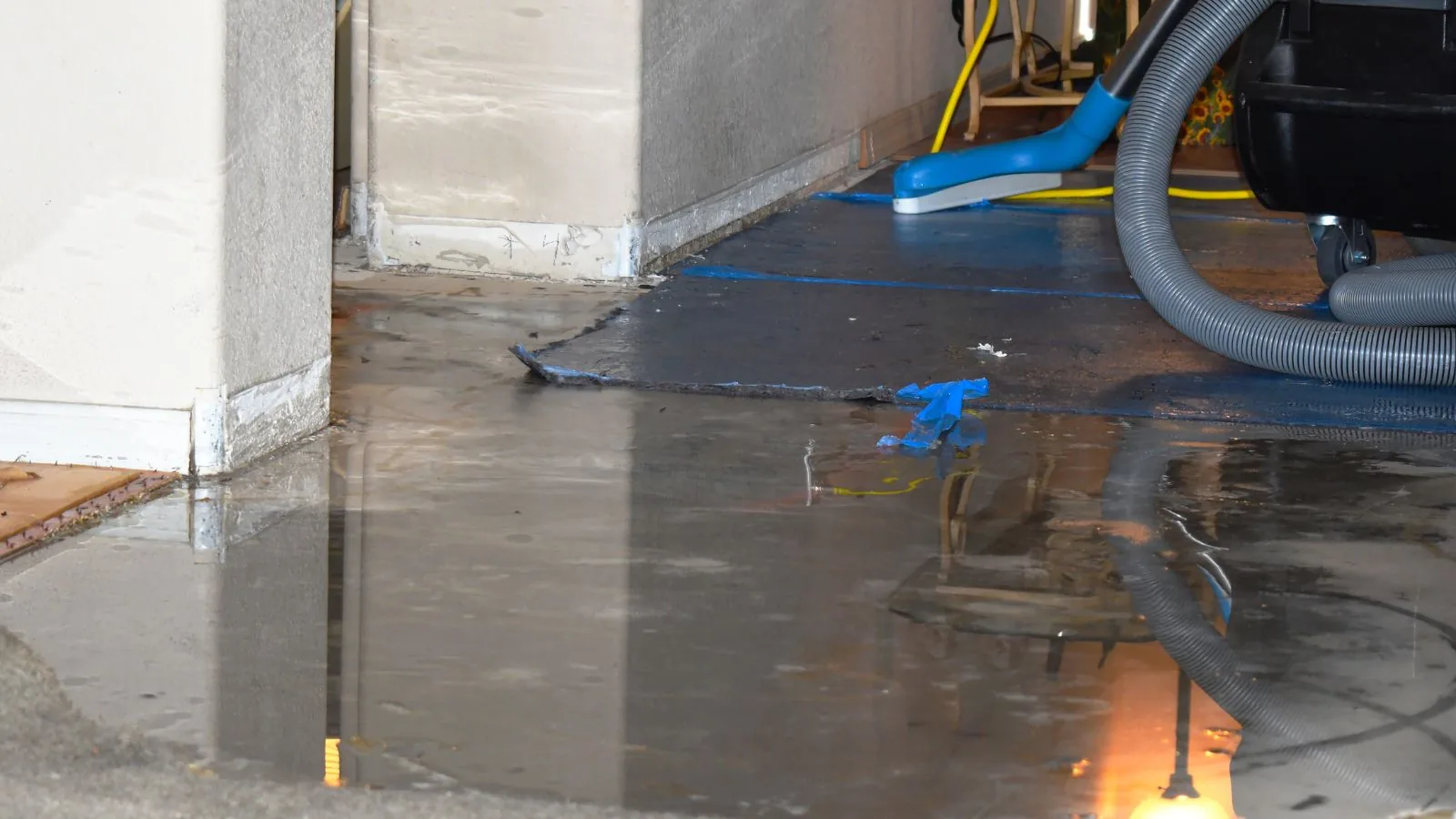
What an assessment is for
A water damage assessment answers four questions. Where did the water come from, how far has it spread, what materials are affected and what has to be done now. Without those answers a crew is guessing, and a guess either leaves water behind or removes materials that could have dried in place.
An assessment also sorts the job by risk. Clean water from a supply line is handled differently from sewage or river water, and a wet ceiling raises different safety questions than a wet floor. The assessment sets priorities so the most urgent work happens first.
What the crew checks on arrival
- Safety first: electrical hazards, a sagging ceiling, slippery floors and any gas smell.
- The source: a pipe, an appliance, the roof, the ground or a drain.
- The water category: clean, gray or black water, based on the source and how long it sat.
- The affected area: rooms, floors, wall bases, ceilings and hidden cavities, mapped with meters and thermal imaging.
- The materials: carpet, pad, hardwood, drywall, insulation and cabinetry, since each reacts differently.
The ANSI/IICRC S500 standard sorts water into categories, and the category guides what is removed and what is dried. A burst supply line is usually Category 1 at the start, but it can degrade if the water stays in place for days.
Need an assessment for water damage?
Call the 24/7 line. Tell us what happened and where, and we will explain what the assessment will cover.
Questions you will be asked, and why
Expect questions about when the water started, what the source was and whether it has been stopped. The timeline matters, because materials wet for less than about a day can often be dried while materials wet for several days may not. You will also be asked about past leaks, because old moisture changes what a meter reads.
It helps to have a few things ready. Photos from before the cleanup, the age of the flooring and any earlier repairs help the crew read what they see. If you rent, bring the lease contact for the landlord, because decisions about removal may involve them. Tenants should also tell the building manager, since an owner may need to approve removal.
What you should receive after an assessment
| Item | What it tells you |
|---|---|
| A description of the cause and category | Where the water came from and how it will be handled |
| A moisture map or notes | Which areas are wet and how wet they are |
| A scope of work | What will be extracted, dried, removed and cleaned |
| A price explained before work starts | What the work involves and what affects the final cost |
| A plan for insurance records | What photos and readings will be kept for your claim |
South Orange conditions that shape an assessment
South Orange has an East Branch of the Rahway River running the length of the village, and the Village describes low-lying areas that are prone to flooding. A basement near the river is assessed differently from one on higher ground, because groundwater and outside water are both possible sources. Homes in Maplewood and Millburn share the same river system.
Local fact: depth guidance from the Office of Emergency Management
The South Orange Office of Emergency Management is at 76 South Orange Avenue and can be reached at 973-378-7715.
Its flooding guidance refers to flood depths of 6 inches, 12 inches and 2 feet when explaining danger.
South Orange Avenue westbound is the listed evacuation route during severe flooding.
If water is coming in from outside, an assessment may begin after the water stops rising. We will tell you what to do for safety and when to call. Our flood damage restoration page covers that process.
Getting the most out of the visit
Walk the technician through what you saw and when. Point out stains, damp spots and places that smell. If you have photos of the area before the water arrived, show them. Mention past leaks or repairs, since old moisture and old patches change what the meters read.
Ask for a plain explanation of the plan before work starts, including which materials will be removed and why. Ask what you should avoid doing, such as walking on wet carpet or turning off equipment. Write down the scope and the contact number for questions during the job.
Common mistakes before an assessment
- Moving wet items around so the damage pattern is lost.
- Turning on the heat or fans without checking for hidden water.
- Pulling up carpet or flooring without photographing it first.
- Letting the area sit for days because the water looked minor.
- Throwing out damaged items before they were photographed.
A short delay costs little, but a long one raises the damage. If you are unsure what to do, call, and we will tell you what to protect and what to leave alone until the visit.
What happens after the assessment
A good assessment leads straight into work. Extraction starts if there is standing water, wet materials that cannot be saved come out and drying equipment goes in. The numbers from the assessment become the starting point for daily readings, so you can see the change.
You are always free to ask questions before agreeing to work. A crew that explains its plan, shows its readings and answers your questions is a good sign. To arrange an assessment, call (973) 913-7965 and describe what you see.
Frequently asked questions
How long does a water damage assessment take?
It depends on the size of the affected area. A single room takes less time than a basement or several floors, because meters and thermal imaging are used in each room.
Do you need to open walls during an assessment?
Only if readings show water inside. Pinless meters and thermal cameras read through the surface first.
What if I do not know where the water is coming from?
Tell us what you see and when it started. A crew traces the source with meters, and a plumber repairs the pipe or fixture.
Is the assessment connected to my insurance claim?
It can be. The photos, readings and notes taken during an assessment are what many adjusters ask for.
Why does depth guidance matter in South Orange?
The village office of emergency management uses depth thresholds of 6 inches, 12 inches and 2 feet in its flood safety information, which helps people judge how dangerous standing water is.